
Stays near Whitsunday Islands
Find Nearby Accommodation
Hotels, apartments, hostels and luxury stays
We may earn a commission from bookings made through these links, at no extra cost to you.
About Whitsunday Islands
The Whitsunday Islands are an archipelago of 74 continental islands nestled in the heart of the [Great Barrier Reef Marine Park](/au/national-parks/qld/great-barrier-reef-marine-park), renowned for their turquoise waters, lush rainforest interiors, and pristine beaches. The islands are a world-class sailing destination and home to some of Australia's most spectacular scenery. [Whitehaven Beach](/au/attractions/qld/whitehaven-beach), located on Whitsunday Island, is consistently rated one of the world's best beaches for its pure silica sand and striking blue-green waters.
Tours and Experiences


The Whitsunday Islands are an archipelago of 74 continental islands scattered across the heart of the Great Barrier Reef Marine Park, off the central Queensland coast. Unlike coral cays, these are continental islands — remnants of a submerged coastal mountain range — which means they combine lush rainforest interiors with white-sand beaches and the vivid blue-green waters of the Coral Sea. The result is a rare combination of terrestrial and marine environments, both protected and largely intact.
Most of the islands sit within national park or conservation zones, which has kept the majority free from large-scale development. A handful — Hamilton Island most prominently — have resort infrastructure and regular commercial flights, but much of the archipelago remains accessible only by boat, giving it a distinctly unhurried character for those willing to get on the water.
What to See and Do
Whitehaven Beach is the most recognised feature of the Whitsundays, and for good reason. Located on Whitsunday Island — the largest in the group — the beach stretches for approximately seven kilometres and is composed almost entirely of pure silica sand, which stays cool underfoot even in full sun and gives the water its distinctive pale turquoise colour. You can reach Whitehaven by day trip from Airlie Beach, but staying longer allows you to experience it outside the busiest visitor hours.
Hill Inlet, at the northern end of Whitehaven Beach, is where the swirling patterns of sand and water that appear in countless photographs of the region are formed. The inlet is tidal, and the shifting sands create an ever-changing composition of white, aqua, and deep blue. The Tongue Point lookout above the inlet is the vantage point for this view, and timing your visit to coincide with low tide will give you the most dramatic sand movement.
Heart Reef is a small coral formation in the shape of a heart, located within the Hardy Reef lagoon. It sits within a protected zone and cannot be snorkelled or dived — the only way to see it properly is from above, via seaplane or helicopter. Several operators run scenic flights departing from Hamilton Island Airport, and the aerial perspective across the reef system is well worth the trip even beyond Heart Reef itself.
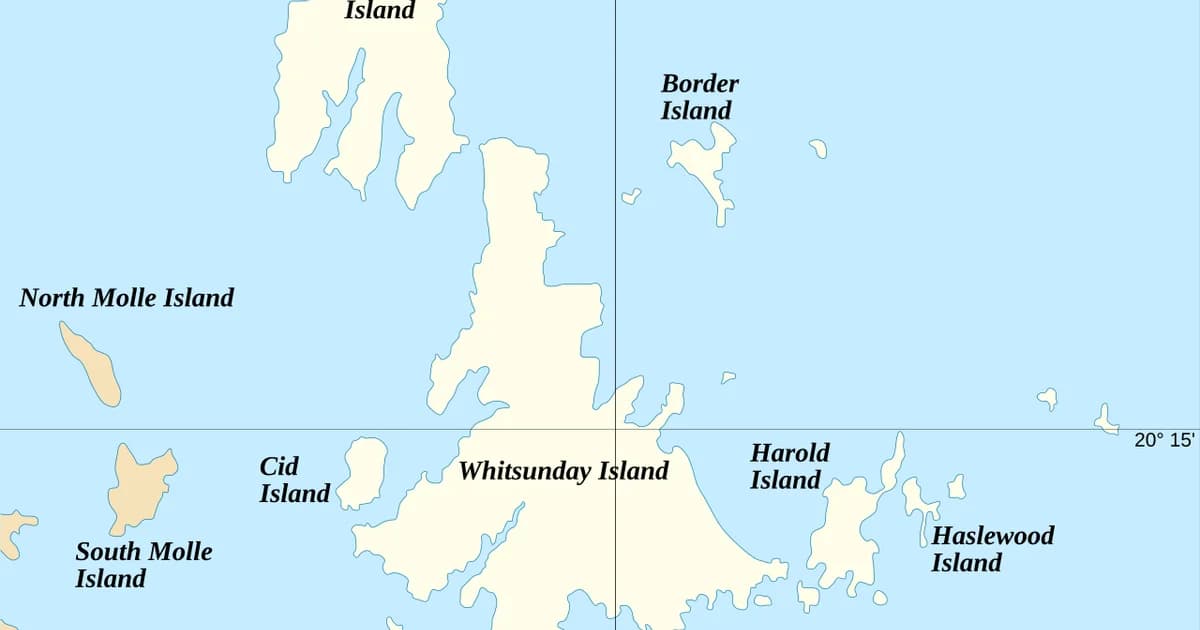
Hook Island offers some of the best snorkelling and diving in the group. Positioned directly above Whitsunday Island, its fringing reefs are accessible from several anchorages and attract a wide variety of marine life. Nara Inlet, on the south coast of Hook Island, also has Aboriginal rock art and is a popular anchorage for sailing vessels.
Langford Reef, a slender sand spit and reef near Hayman Island, is a favoured stop on sailing itineraries. At low tide, a sandbar emerges from the water, creating a narrow strip of white sand surrounded by reef. It's a good snorkelling spot and frequently included in multi-day charter routes.
Hamilton Island functions as the main hub for visitors arriving by air. It has a full range of accommodation, restaurants, and activity operators, and sits within easy reach of both Whitehaven Beach and the outer reef. It's also the departure point for many guided tours and experiences across the group, including full-day reef adventures and multi-day expedition cruises.
Beyond the highlights, the Whitsundays reward slower exploration. Sailing between anchorages, kayaking through sheltered bays, and hiking interior trails on larger islands like Whitsunday and Hook are all worthwhile ways to spend time here. Snorkel gear hire is available through charter operators and at Hamilton Island, so you don't need to bring your own equipment.
Guided tours and expedition cruises operate throughout the region — ranging from full-day reef adventures to multi-day private sailing expeditions — and are worth considering if you want local knowledge about the best dive and snorkel sites, particularly on the outer reef.
History
The islands take their name from Captain James Cook, who sailed through the passage between the islands and the mainland on Whit Sunday, 1770, during his charting of the east Australian coast. Cook's passage — now known as Whitsunday Passage — runs between the island group and the shoreline and remains a primary navigation route today.
For much of the following century, the islands remained largely undisturbed by European settlement. From the late 1800s, grazing and timber harvesting began on several islands, activities that continued into the early 20th century. The modern tourism era began in earnest during the 1960s, with resort development and sailing operations establishing the region as a destination. Today, the Great Barrier Reef Marine Park Authority oversees the marine environment, while Queensland National Parks manages the terrestrial areas, and the vast majority of the archipelago is protected from development.
Getting There and Access
The primary land-based gateway is Airlie Beach, a coastal town on the Whitsunday Coast accessible by road from Mackay (approximately one hour south) or Proserpine (around 25 minutes inland). The Proserpine/Whitsunday Coast Airport receives regular flights from Brisbane and other domestic centres, with transfers to Airlie Beach available.
Day trips and overnight sailing charters depart from Abel Point Marina in Airlie Beach. This is where you'll find the bulk of charter operators, from bareboat hire to crewed vessel bookings. The marina is well equipped and a short walk or drive from the town centre.
Hamilton Island Airport accepts direct flights from Sydney, Melbourne, and Brisbane, making it the most convenient air access point if you're planning to base yourself on the island or use it as a staging point for reef and island day trips. Seaplane and helicopter flights also operate from Hamilton Island for scenic tours and transfers to outer reef sites.
Camping on Whitsunday Island — including sites near Whitehaven Beach — is available through the Queensland Parks and Wildlife Service. The current camping fee is $7.15 per person per night. Sites must be booked in advance, and you'll need to bring all your own water and supplies, as there are no facilities at most camping areas.
Best Time to Visit
The dry season, June to October, is the most comfortable and popular time to visit the Whitsundays. Temperatures are warm but not oppressive, trade winds are consistent (ideal for sailing), and humidity is lower than in the wet season months. September and October in particular are busy — book sailing charters and accommodation well in advance if you're travelling then.
Stingers — primarily box jellyfish and Irukandji — are present in nearshore waters from October through to May. During this period, swimming outside of stinger nets or without a full-body lycra suit (stinger suit) is not recommended. Most tour and charter operators provide stinger suits, but it's worth confirming before you book. The risk diminishes significantly during the dry season months of June to August, though caution is always advisable in tropical waters.
Visitor Tips
- Hill Inlet timing matters. Check tide times before planning your visit to Tongue Point. Low tide produces the most dramatic sand swirling in the inlet — high tide flattens it considerably.
- Book ahead for peak season. Sailing charters in September and October fill up months in advance. If you have fixed travel dates, secure your charter early.
- Sun protection is essential. Reflected light off the water intensifies UV exposure considerably. Reef-safe sunscreen, hats, and UV-protective clothing are worth packing even on overcast days.
- Tidal currents around reef passages and channels can be strong. If you're snorkelling or kayaking independently, be mindful of tidal movement and stay within sheltered waters unless you're experienced.
- Camping on the islands provides a very different experience from resort or charter stays — quieter, more immersive, and closer to the natural environment — but requires thorough preparation given the lack of facilities.
Nearby Attractions
The Whitsundays sit within a broader region that includes several other points of interest. Airlie Beach itself has a lagoon swimming area — useful during stinger season — and a range of dining and accommodation options. The Conway National Park, which borders the Whitsunday Coast, has accessible walking trails through coastal rainforest and provides context for the mainland ecology that the island interiors mirror. Proserpine, further inland, serves as a functional base for visitors arriving by road or through the regional airport.
Warnings
Getting There
Location and map
Fly or drive to Airlie Beach or Proserpine. Day trips and overnight sailing charters depart from Abel Point Marina, Airlie Beach. Seaplane and helicopter tours also available from Hamilton Island Airport.
Nearest airport
Visitor Tips
- •Visit Hill Inlet at low tide to see the stunning swirling sand patterns from the Tongue Point lookout. Book sailing charters well in advance for peak season (September–October). Hamilton Island has direct flights from Sydney, Melbourne, and Brisbane.
Find Nearby Accommodation
Hotels, apartments, hostels and luxury stays
We may earn a commission from bookings made through these links, at no extra cost to you.
Quick Facts
At a Glance
Identity
- Also Known As
- ["Whitsundays"]
The Place
- Significance
- National
Plan Your Visit
- Entry
- Paid
- Duration
- 2–7 days
- Best Time
- June to October
- Hours
- Open 24 hours. Ferry, sail or fly from mainland.
Location
- Area
- Whitsundays
- Region
- Mackay
- State
- Queensland
Highlights
Activities
Features
Facilities
Travellers also visited
Tap + to build a trip
Find Nearby Accommodation
Hotels, apartments, hostels and luxury stays
We may earn a commission from bookings made through these links, at no extra cost to you.