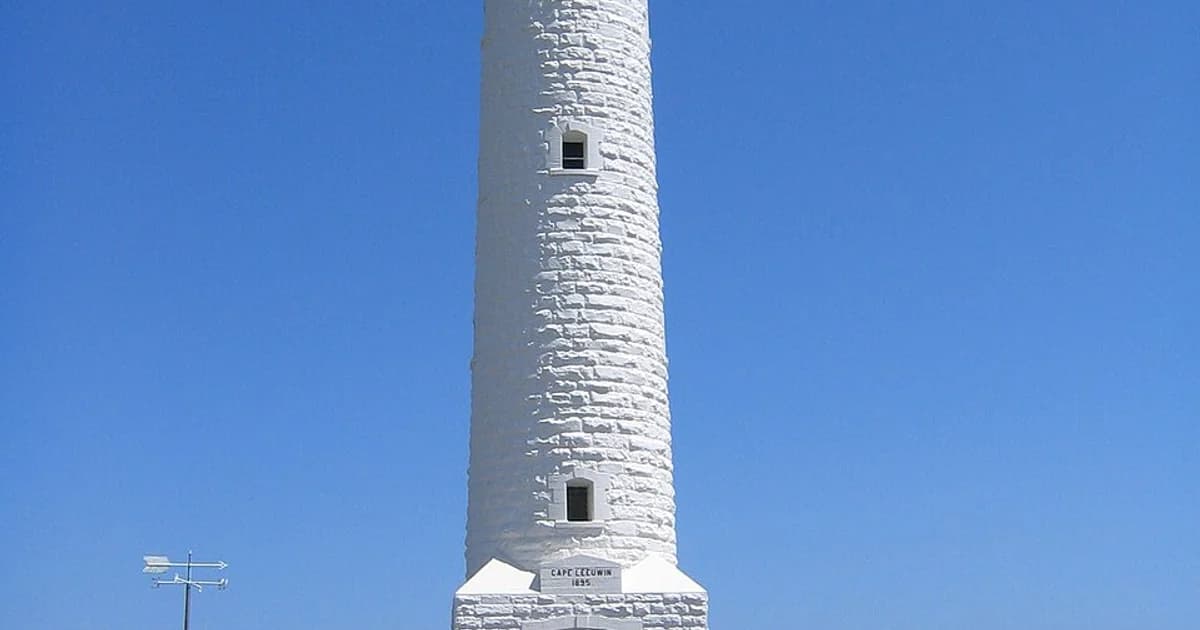
Cape Leeuwin Lighthouse
Cape Leeuwin Lighthouse — Cape Leeuwin is the most southwesterly point of the Australian continent and the point where the Indian and Southern Oceans meet.
Natural Landmark in Western Australia

Stays near Cape Leeuwin Lighthouse
Find Nearby Accommodation
Hotels, apartments, hostels and luxury stays
We may earn a commission from bookings made through these links, at no extra cost to you.
About Cape Leeuwin Lighthouse
Cape Leeuwin is the most southwesterly point of the Australian continent and the point where the Indian and Southern Oceans meet. The lighthouse, completed in 1896 and standing 39 metres tall, is Australia's tallest mainland lighthouse and commands dramatic views of two oceans colliding in powerful swells. The cape is significant in maritime history as a landmark for ships rounding the bottom of Australia, and the surrounding waters are productive whale watching territory for humpbacks during their winter migration.
Tours and Experiences


Cape Leeuwin Lighthouse sits at the most southwesterly point of the Australian continent — the place where the Indian and Southern Oceans meet. It's a genuinely striking location, and one that rewards a visit even if you never set foot inside the tower. Standing at the cape on a clear day, you can see distinct wave patterns where two great oceans converge in rolling, powerful swells.
The lighthouse itself was completed in 1896 and at 39 metres tall remains Australia's tallest mainland lighthouse. It's still operational, and guided tours allow you to climb inside and take in the views from the top — on a good day, the meeting of the two oceans is clearly visible as the wave patterns shift and collide below.
History
Cape Leeuwin was named in 1627 by Dutch navigator Dirk Hartog, and the cape quickly became one of the most important landmarks in Australian maritime history. Ships rounding the bottom of the continent — whether heading east or west — used this headland as a critical navigation point, and the treacherous convergence of two ocean systems made it genuinely hazardous territory.
Construction of the lighthouse began in 1894 and was completed in 1896, built in response to the real dangers this stretch of coastline posed to shipping. The structure is colonial-era engineering at a meaningful scale — limestone and brick, designed to last, and still standing in active service more than 125 years later. It remains Australia's most powerful mainland lighthouse.
What to See and Do
Climb the lighthouse tower. Guided tours run throughout the day and take you up the steep, narrow staircase to the top of the tower. From up there, the view of two oceans is well worth the climb — the sea below shows the meeting point in visible wave patterns. Check tour times at the visitor centre on arrival. Tours are priced at $22 for adults and $12 for children; entry to the grounds is free.
The heritage waterwheel. One of the more unusual features on site is an old waterwheel that once supplied water to the lighthouse keepers' quarters. Now heavily calcified and encrusted with mineral deposits, it has a distinctly otherworldly appearance. It's worth stopping to look at, but take the safety warnings seriously — the rocks around the waterwheel are extremely slippery, and visitors should not stand on them.
Whale watching. From June through to November, humpback whales pass through the waters around Cape Leeuwin during their winter migration, and the elevated vantage point of the lighthouse makes for excellent viewing. Guided whale watching experiences are also available through local operators if you want to get closer to the action out on the water.
Cape to Cape Track. Cape Leeuwin is the southern endpoint of the Cape to Cape Track, a 135-kilometre walking route that runs north to Cape Naturaliste. If you're walking the full track, finishing here has obvious appeal. Guided multi-day walking tours of the Cape to Cape Track are also available for those who want a supported experience.
Ocean photography. The combination of dramatic coastal scenery, powerful surf, and the lighthouse structure gives photographers plenty to work with, particularly in winter when the swell is at its most impressive.
Getting There and Access
Cape Leeuwin is located 8 kilometres south of Augusta and approximately 340 kilometres south of Perth. The road from Augusta is fully sealed and straightforward to navigate. Parking is available on site.
The lighthouse grounds are wheelchair accessible, and facilities include a visitor centre, café, toilets, and parking. The lighthouse tower tour itself involves a steep, narrow staircase and may not be suitable for all visitors.
Best Time to Visit
The lighthouse is open every day from 8:45am to 5:00pm and can be visited year-round. That said, June to November is the standout period if whale watching is a priority, and the winter swells during this time also make the ocean more dramatic. The cape's exposed position means weather can change quickly regardless of season — it's worth bringing a layer even in summer.
Visitor Tips
- Lighthouse tower tours are guided, so check the schedule at the visitor centre when you arrive rather than assuming a tour is about to depart
- The tidal rocks near the waterwheel are extremely slippery — stay well back and don't attempt to stand on them
- Keep a safe distance from the ocean edges throughout the site; this is a powerful surf zone
- Allow one to two hours for a full visit including the tower climb, waterwheel, and time to take in the views
- If you're completing the Cape to Cape Track, the lighthouse marks the official southern end point
Warnings
Getting There
Location and map
8 km south of Augusta, 340 km south of Perth. Fully sealed road from Augusta.
Visitor Tips
- •Lighthouse tower tours are guided and run throughout the day — check times at visitor centre
- •The meeting of two oceans is visible as distinct wave patterns from the lighthouse top
- •The old calcified waterwheel is an unusual heritage feature — now overgrown with mineral deposits
- •End your Cape to Cape Track here if walking the full 135 km
Find Nearby Accommodation
Hotels, apartments, hostels and luxury stays
We may earn a commission from bookings made through these links, at no extra cost to you.
Quick Facts
At a Glance
The Place
- Significance
- National
Plan Your Visit
- Entry
- Paid
- Duration
- 1–2 hours
- Best Time
- June to November (whale watching and winter swell); year-round
- Hours
- {"sunday":{"open":"08:45","close":"17:00"},"monday":{"open":"08:45","close":"17:00"},"tuesday":{"open":"08:45","close":"17:00"},"wednesday":{"open":"08:45","close":"17:00"},"thursday":{"open":"08:45","close":"17:00"},"friday":{"open":"08:45","close":"17:00"},"saturday":{"open":"08:45","close":"17:00"}}
Location
- Area
- Leeuwin
- Region
- Margaret River
- State
- Western Australia
Good to Know
Highlights
Activities
Features
Facilities
Travellers also visited
Tap + to build a trip
Find Nearby Accommodation
Hotels, apartments, hostels and luxury stays
We may earn a commission from bookings made through these links, at no extra cost to you.