
Stays near Lake Barrine
Find Nearby Accommodation
Hotels, apartments, hostels and luxury stays
We may earn a commission from bookings made through these links, at no extra cost to you.
World Heritage Status of Lake Barrine
- Status
- UNESCO World Heritage Site
About Lake Barrine
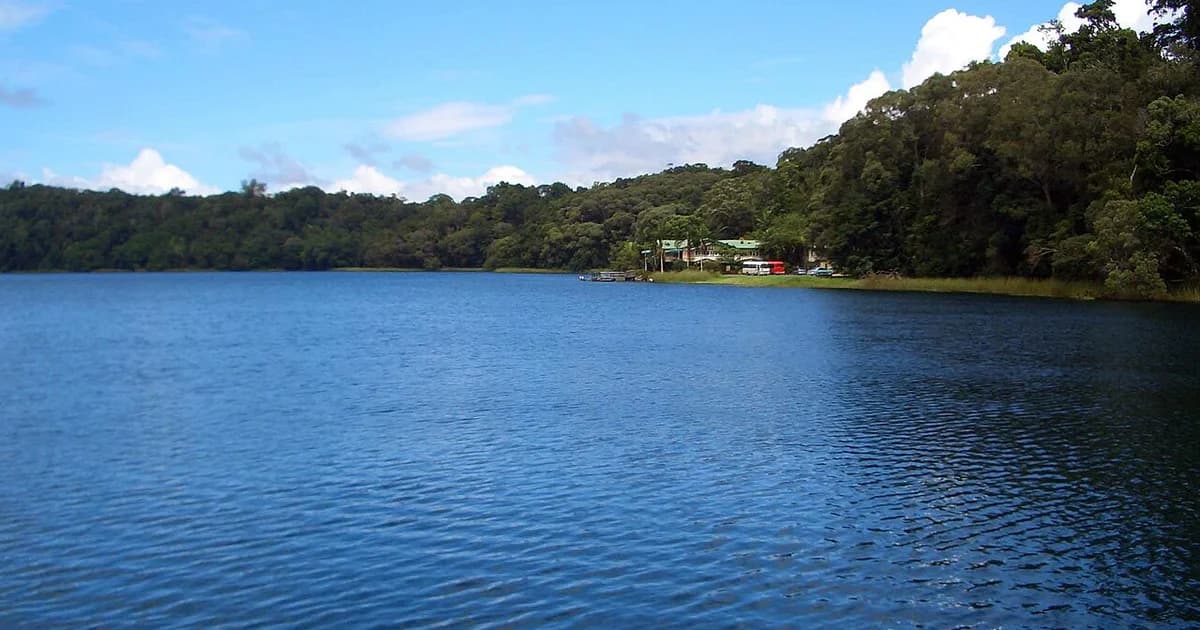
Lake Barrine is a volcanic crater lake on the Atherton Tableland, formed about 17,000 years ago when a massive volcanic explosion created a maar crater that subsequently filled with water. The lake is ringed by ancient rainforest including two spectacular kauri pines estimated to be over 1,000 years old, and a 5.5-km walking track circles the lake through World Heritage rainforest. Boat tours operate on the lake and the historic tea house has been offering refreshments since 1930.
Tours and Experiences
Tours & Experiences
 Selling fast
Paronella Park and Millaa Millaa Falls Full-day Tour from Cairns
4.9(52)
 Selling fast
Adventure &Taste Atherton Tablelands Food & Wine Tour from Cairns
4.9(278)
Day Tour to Paronella Park, Lake Barrine and Millaa Millaa Falls
4.8(317)

Atherton Tablelands Rain Forest by Night from Cairns
4.8(427)

Cairns hidden gems, Historic Village Herberton and Tableland
4.8(4)
Powered by Viator · Affiliate link
Lake Barrine sits quietly in the highlands of the Atherton Tableland, about 80 kilometres south of Cairns, occupying a volcanic crater that has been slowly filling with water for the past 17,000 years. It's one of two crater lakes in the area — the other being Lake Eacham, just 4 kilometres away — and together they form part of Crater Lakes National Park, a protected area within the Wet Tropics World Heritage Area. Whether you're drawn by the geology, the rainforest, the wildlife, or simply the prospect of a pot of tea beside still water, Lake Barrine offers a genuinely rewarding half-day stop on any Atherton Tableland itinerary.
The lake itself is a maar crater — formed not by a slow volcanic build-up but by a sudden, violent explosion when rising magma met groundwater. The resulting blast left behind a wide, steep-sided depression that gradually filled with rainwater over millennia. Today the lake is almost perfectly circular, its surface calm and dark, reflecting the dense forest that crowds right to the water's edge. The surrounding rainforest is ancient and largely undisturbed, and the sense of stillness here is quite distinct from the more open landscapes you pass through on the drive up.
Entry to the lake is free, and it's accessible year-round. Most visitors allow two to three hours, though you could easily linger longer.
What to See and Do
The Lake Circuit Walk
The most complete way to experience Lake Barrine is on foot. A 5.5-kilometre walking track circles the entire lake through World Heritage rainforest, taking roughly an hour and a half at a relaxed pace. The path is well-maintained and relatively level, winding through tall canopy rainforest with fig trees, palms, and a dense understorey that keeps the walk cool even in the warmer months.
Near the start of the circuit, you'll pass the two kauri pines that have become something of a symbol for the lake. These trees are estimated to be over 1,000 years old and are genuinely impressive in scale — their trunks are broad and straight, rising well above the surrounding canopy. Kauri pines are rare in Australia, and specimens of this age and size are rarer still. It's worth pausing here before continuing around the track.
The walk is excellent for birdwatching. The rainforest supports a wide variety of species, and the combination of water, dense vegetation, and relative quietness means you're likely to encounter birds throughout. Keep an eye on the forest floor and lower branches, and listen carefully — you'll often hear birds before you see them.
Wildlife watching more broadly is rewarding along the circuit. Eastern water dragons are commonly seen near the water's edge and around the tea house area, often sitting quite still on rocks or logs. Depending on the time of day and season, you may also encounter other rainforest fauna.
One important note: cassowaries have been recorded in and around the Lake Barrine area. These large flightless birds are generally wary of people, but they can be unpredictable if they feel threatened or if they associate humans with food. Give them plenty of space and do not attempt to feed them.
Boat Tours
Boat tours operate on the lake and offer a different perspective on the crater — looking back at the forested rim from the water, you get a clearer sense of the lake's scale and circular shape. Tours run from the tea house area, and being out on the water gives you the opportunity to observe the lake's surface and surrounds in a way that the walking track doesn't quite replicate. This is a particularly good option if you have children with you, or if the full circuit walk isn't practical.
The Historic Tea House
The Lake Barrine Tea House has been operating since 1930, making it one of the longer-running visitor facilities in Tropical North Queensland. It sits right at the water's edge with views across the lake, and has become a genuine part of the Lake Barrine experience rather than simply a refreshment stop.
Devonshire tea — scones with jam and cream, served with tea — has been the signature offering here for decades, and it remains a popular choice. The tea house also provides a good base from which to start the walking circuit and access the boat tours. Picnic areas are available nearby if you'd prefer to bring your own food.
Photography
The lake offers strong photographic opportunities throughout the day. The reflections on the still water are particularly effective in the early morning when light winds mean the surface is largely undisturbed. The kauri pines are a popular subject, as are the water dragons, which tend to be cooperative subjects given their habit of sitting motionless for extended periods.
The forest itself rewards careful photography — the interplay of light through the canopy, the texture of ancient bark, and the green depth of the understorey all offer material beyond the obvious wide shots of the lake.
Swimming
Swimming is listed as an activity in some general references to the lake, but it's worth noting clearly: swimming is not recommended at Lake Barrine due to the depth of the water. The crater is steeply sided and the water drops away sharply from the edges. If you're looking for a swim on the Atherton Tableland, Lake Eacham nearby is a better option and is generally considered suitable for swimming.
History
Lake Barrine's origins predate human settlement of the region by thousands of years. The maar crater formed approximately 17,000 years ago when volcanic activity beneath the Atherton Tableland resulted in a massive explosion — the kind of event that occurs when magma at depth interacts violently with groundwater. Unlike a conventional volcanic eruption that builds a cone of material, a maar eruption blasts outward and downward, leaving a broad, relatively flat-floored crater with low surrounding rims. Over the millennia that followed, the crater collected rainwater and was gradually encircled by the rainforest that now covers much of the Wet Tropics region.
The lake sits within the Wet Tropics World Heritage Area, which was inscribed on the UNESCO World Heritage List in recognition of the region's extraordinary biodiversity and the ecological significance of its rainforests. This is one of the oldest continuously surviving rainforest ecosystems on Earth, and the forests around Lake Barrine contain species with evolutionary lineages stretching back to Gondwana. The kauri pines near the lake's edge — already over a thousand years old — are themselves a reminder of how long these forests have been developing.
European interest in the lake as a tourist destination developed in the early twentieth century, as the Atherton Tableland became more accessible and its cooler climate and scenic landscapes drew visitors from the coast. The tea house was established in 1930, and for more than ninety years it has served as the social and logistical hub of visits to the lake. The combination of natural spectacle and this kind of long-running human presence gives Lake Barrine a particular character — it's a place with genuine history layered over its geology.
Getting There and Access
Lake Barrine is located on Lake Barrine Road, approximately 6 kilometres north of Yungaburra. From Cairns, the drive is around 80 kilometres and can be made via two main routes: south via the Gillies Highway (which climbs dramatically from the coast through a series of steep bends up the range) or via Malanda. Both routes take roughly 90 minutes depending on conditions and stops.
If you're combining Lake Barrine with Lake Eacham — which makes a great deal of sense given their proximity — Lake Eacham is about 4 kilometres away, and both can be visited in a single morning or afternoon without feeling rushed.
Car parking is available at the lake, and the site is wheelchair accessible. Toilets are also available on site.
Several tour operators include Lake Barrine on Atherton Tableland itineraries departing from Cairns, covering combinations that might include Paronella Park, Millaa Millaa Falls, or broader Tableland food and wine experiences. There are also guided night tours of the Atherton Tableland rainforest that can offer quite different wildlife encounters after dark. If you'd prefer to have transport and guiding arranged, these tours are worth considering, particularly if you're not travelling with your own vehicle.
Best Time to Visit
Lake Barrine is open and accessible year-round, and the rainforest setting means it retains its character across all seasons. The Atherton Tableland sits at elevation — generally between 700 and 900 metres above sea level — which gives it a noticeably cooler and more temperate climate than coastal Cairns. This makes it a pleasant escape during the hot, humid build-up months (October to December) and the wet season (typically January to March), when the coast can feel oppressive.
During the wet season, the rainforest is at its most lush and the falls and waterways in the region are at their most dramatic, but some roads and tracks can be affected by heavy rainfall. The walking circuit at Lake Barrine is generally manageable year-round, though conditions underfoot will be muddier during and after heavy rain.
The dry season (May to September) brings clearer skies and cooler temperatures, and is the most popular time to visit the Tableland overall. Early mornings in this season can be quite cold — bring a layer if you're planning to walk at dawn.
Birdwatching tends to be most productive in the early morning regardless of season.
Visitor Tips
- Start with the kauri pines. They're near the beginning of the circuit walk, and they're worth taking your time with. Most visitors underestimate how large they are until they're standing beside them.
- Walk the full circuit if you can. The 5.5-kilometre loop takes about 90 minutes and gives you a complete picture of the lake and its surroundings. The sections away from the tea house area are quieter and offer the best wildlife encounters.
- Arrive early for photography and birdwatching. The light is better, the lake surface is calmer, and the birds are more active in the first hour or two after sunrise.
- Don't feed the wildlife. This applies particularly to water dragons and cassowaries. Feeding wildlife habituates them to humans and causes genuine harm, and with cassowaries it can also create a safety issue.
- Combine with Lake Eacham. The two crater lakes are just 4 kilometres apart. Visiting both adds context to the geology of the area and gives you two distinct lake experiences in a single outing.
- The tea house is part of the visit. After 90-plus years, stopping for a pot of tea at the Lake Barrine Tea House is more than a refreshment break — it connects you with a long tradition of visitors doing exactly the same thing.
- Wear walking shoes. The circuit track is well-maintained but it's a rainforest path, and appropriate footwear makes a difference, particularly after rain.
Nearby Attractions
Lake Eacham is the most obvious companion to Lake Barrine — another maar crater lake just 4 kilometres away, also within Crater Lakes National Park. Lake Eacham is popular for swimming and has its own circuit walk, and the two lakes together give you a complete picture of the region's volcanic geology.
Yungaburra, 6 kilometres to the south, is a small and well-preserved historic village on the Atherton Tableland. It has a platypus-viewing spot on Peterson Creek, a weekly markets event, and a collection of heritage-listed buildings. It's a good place to stop for a meal before or after visiting the lakes.
Millaa Millaa Falls is one of the most photographed waterfalls in Queensland, located further south on the Tableland. It can be combined with Lake Barrine as part of a longer Tableland day trip.
Paronella Park, an unusual historic site featuring the ruins of a Spanish-style castle set in a rainforest garden along Mena Creek, is within reach of the Tableland and is often combined with Lake Barrine on guided day tours from Cairns.
Warnings
Getting There
Location and map
Drive south from Cairns approximately 80 km via Malanda or via Atherton on the Gillies Highway. Lake Barrine is 6 km north of Yungaburra on Lake Barrine Road.
Nearest airport
Visitor Tips
- •The lake circuit walk (5.5 km, 1.5 hours) is excellent for birdwatching and the two ancient kauri pines near the start are magnificent. The historic tea house serves devonshire tea — a tradition since the 1930s. Combine with Lake Eacham (4 km away) for a complete crater lakes experience.
Tours & Experiences
Selling fastParonella Park and Millaa Millaa Falls Full-day Tour from Cairns
4.9(52)
Selling fastAdventure &Taste Atherton Tablelands Food & Wine Tour from Cairns
4.9(278)
Day Tour to Paronella Park, Lake Barrine and Millaa Millaa Falls
4.8(317)
Powered by Viator · Affiliate link
Find Nearby Accommodation
Hotels, apartments, hostels and luxury stays
We may earn a commission from bookings made through these links, at no extra cost to you.
Quick Facts
At a Glance
Identity
- Also Known As
- ["Crater Lakes National Park"]
The Place
- UNESCO
- World Heritage Site
- Significance
- State
Plan Your Visit
- Entry
- Free
- Duration
- 2–3 hours
- Best Time
- Year-round
- Hours
- Open 24 hours. Lake Barrine Rainforest Cruise runs daily.
Location
- Area
- Lake Barrine
- Region
- Cairns
- State
- Queensland
Good to Know
Highlights
Activities
Features
Facilities
Travellers also visited
Tap + to build a trip
Find Nearby Accommodation
Hotels, apartments, hostels and luxury stays
We may earn a commission from bookings made through these links, at no extra cost to you.
Nearby
Campsites(5)
Attractions(5)
Toilets(3)
Groceries(5)
Fuel(5)
Dump Points(5)
Yungaburra Transfer Station Dump Point
Free · 5.9km
Grove Street Atherton - Dump Point
Free · 16.2km
Gordonvale Dump Point
Free · 23.3km
Fishery Falls Holiday Park
caravan-park · 27.8km
Mareeba Dump Point
Free · 36.6km
Pubs(5)
Fast Food(5)
Golf Courses(1)
Wineries(1)
State Forests(5)
National Parks(5)
Lake Barrine to Lake Eacham Rainforest Corridor Nature Refuge
Nature Reserve · 1.7km
Barrine Park Nature Refuge
Nature Reserve · 1.7km
Crater Lakes National Park
Nature Reserve · 1.9km
Donaghys Corridor Nature Refuge
Nature Reserve · 2.2km
Maroobi Park Nature Refuge
Nature Reserve · 2.3km