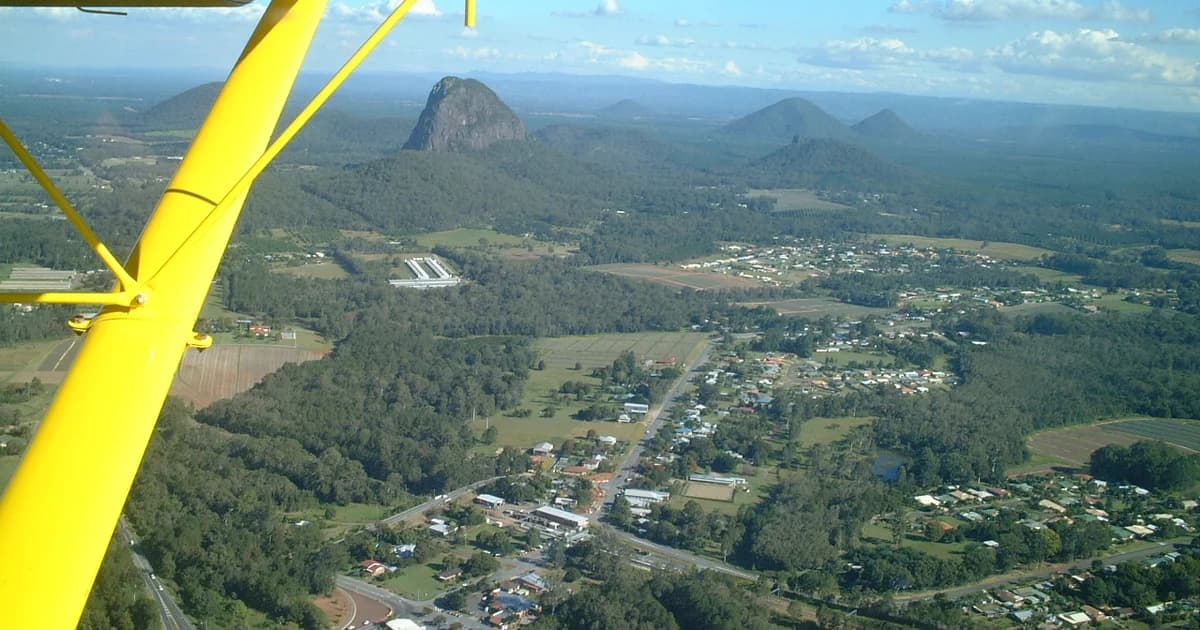
Glass House Mountains
Coonowrin, Beerwah, Tibrogargan, Ngungun
The Glass House Mountains are a striking collection of 11 volcanic plugs rising abruptly from the [Sunshine…
Natural Landmark · Rock Formation in Queensland

Stays near Glass House Mountains
Find Nearby Accommodation
Hotels, apartments, hostels and luxury stays
We may earn a commission from bookings made through these links, at no extra cost to you.
About Glass House Mountains
The Glass House Mountains are a striking collection of 11 volcanic plugs rising abruptly from the [Sunshine Coast](/au/places/qld/sunshine-coast) hinterland plains, formed by rhyolite and trachyte intrusions some 27 million years ago. These iconic peaks hold deep spiritual significance for the Jinibara and Kabi Kabi peoples, who regard them as a family of ancestral beings. The mountains offer excellent hiking, rock climbing, and panoramic views stretching to the Pacific coast.
Tours and Experiences
Tours & Experiences

Powered by Viator · Affiliate link
The Glass House Mountains rise sharply from the flat plains of the Sunshine Coast hinterland like nothing else in south-east Queensland. These 11 volcanic plugs — ancient cores of rhyolite and trachyte that have resisted erosion for around 27 million years while the surrounding landscape wore away — create one of the most distinctive skylines in the country. Whether you're approaching along the Bruce Highway or catching your first glimpse from a lookout, the abruptness of their rise from the plains makes an immediate impression.
The mountains sit within Glass House Mountains National Park, roughly an hour north of Brisbane, and offer a full range of outdoor activities across several peaks and access points. Entry is free.
Cultural Significance
For the Jinibara and Kabi Kabi peoples, these peaks are far more than a geological curiosity. The mountains are regarded as a family of ancestral beings — each peak has an Indigenous name: Coonowrin, Beerwah, Tibrogargan, and Ngungun among them — and the area holds deep spiritual significance that predates European contact by thousands of years.
Captain James Cook gave the mountains their European name in 1770, observing their distinctive glassy appearance from his ship offshore. European settlers arrived in the mid-1800s, establishing rural farming and timber communities in the surrounding district. Today the peaks remain significant to Indigenous communities while also serving as a popular outdoor recreation destination.
What to See and Do
The peaks vary considerably in what they offer visitors, so it's worth thinking about your fitness level and interests before deciding where to go.
Mount Ngungun is widely considered the most accessible of the summits and the best option for a rewarding hike without technical climbing. The trail involves some steep and rocky sections, but the views from the top — stretching across the plains and out to the Pacific coast — are well worth the effort. It's a popular choice for families and those looking for a solid half-day walk.
Wild Horse Mountain Lookout offers panoramic views over the mountains without requiring any significant hiking. If you're visiting with younger children or simply want an overview of the landscape, this is a practical stop.
For those interested in rock climbing, the area has a strong climbing community and several routes across the peaks. However, it's important to note that climbing on Tibrogargan and Beerwah is not permitted — these peaks hold particular cultural significance and are closed to climbing. Permits are required for climbing peaks where it is allowed, so check current access conditions before you go.
Beyond the summits, the national park supports excellent birdwatching, and the trails are suitable for photography throughout. Mountain biking is also available in the area. Picnic areas, BBQ facilities, toilets, and car parks are spread across various access points, making it practical for a full-day outing. Dogs are permitted in some areas of the park — check current Queensland National Parks guidelines for specific locations where dogs are allowed.
Guided tours that include lookout stops, nature walks, and lunch are available if you'd prefer an organised experience of the mountains.
Getting There and Access
From Brisbane, head north on the Bruce Highway (M1) for approximately 70 kilometres and take the Glass House Mountains exit. Individual peaks are well signposted from the Glass House Mountains township. Allow around an hour from Brisbane CBD.
Best Time to Visit
April through September offers the most comfortable conditions for hiking. Queensland summers bring heat and humidity that can make exposed rocky tracks physically demanding, particularly on longer routes. If you do visit in the warmer months, starting early in the day is strongly advisable.
Visitor Tips
- Mount Ngungun is the recommended starting point for most visitors — it offers the best return on effort for a first visit.
- Climbing on Tibrogargan and Beerwah is not permitted. Respect these restrictions, which exist to honour the cultural significance of the peaks.
- Carry plenty of water — there are limited water sources on the trails.
- The tracks are steep and rocky in sections; appropriate footwear is essential.
- Be aware of snakes, particularly in warmer months. Stay on marked trails and watch where you step.
- The Wild Horse Mountain Lookout is an easy stop for views without a hike, and suits visitors of all fitness levels.
Warnings
Getting There
Location and map
Drive north from Brisbane on the Bruce Highway (M1) for approximately 70 km. Take the Glass House Mountains exit. Individual peaks are signposted from the Glass House Mountains township. Approximately 1 hour from Brisbane CBD.
Nearest airport
Visitor Tips
- •Mount Ngungun is the most accessible summit with spectacular views. Tibrogargan and Beerwah are climbing peaks (permit required). Start early in summer to avoid heat. The Wild Horse Mountain lookout offers an easy panoramic view without a hike.
Tours & Experiences
Powered by Viator · Affiliate link
Find Nearby Accommodation
Hotels, apartments, hostels and luxury stays
We may earn a commission from bookings made through these links, at no extra cost to you.
Quick Facts
At a Glance
Identity
- Traditional Name
- Coonowrin, Beerwah, Tibrogargan, Ngungun
- Also Known As
- ["Glass House Mountains National Park"]
The Place
- Significance
- National
Plan Your Visit
- Entry
- Free
- Duration
- Half day to full day
- Best Time
- April to September
- Hours
- Open 24 hours.
Location
- Region
- Sunshine Coast
- State
- Queensland
Good to Know
Highlights
Activities
Features
Facilities
Travellers also visited
Tap + to build a trip
Find Nearby Accommodation
Hotels, apartments, hostels and luxury stays
We may earn a commission from bookings made through these links, at no extra cost to you.
Nearby
Campsites(5)
Trails(3)
Attractions(5)
Toilets(3)
Groceries(5)
Fuel(5)
Dump Points(5)
Beerwah Dump Point
Free · 3.1km
Maleny Showground
Free · 17.5km
Woodford Dump Point
Free · 19km
Caloundra West Tourist Information Centre
Free · 19.2km
Caboolture Showground Dump Point
Free · 19.4km