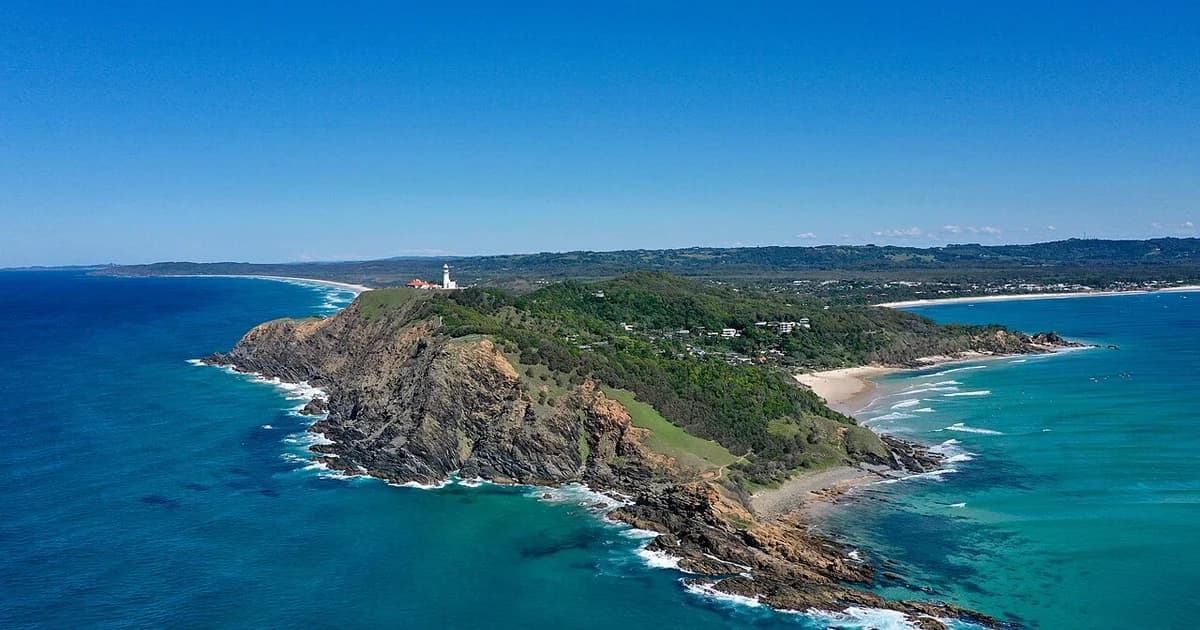
Cape Byron / Byron Bay Lighthouse
Cape Byron / Byron Bay Lighthouse — Cape Byron is the most easterly point of mainland Australia, topped by the heritage-listed [Byron Bay](/au/places/nsw/byron-bay) Lighthouse built in 1901.
Natural Landmark in New South Wales

Stays near Cape Byron / Byron Bay Lighthouse
Find Nearby Accommodation
Hotels, apartments, hostels and luxury stays
We may earn a commission from bookings made through these links, at no extra cost to you.
About Cape Byron / Byron Bay Lighthouse
Cape Byron is the most easterly point of mainland Australia, topped by the heritage-listed [Byron Bay](/au/places/nsw/byron-bay) Lighthouse built in 1901. The headland offers 360-degree views of Byron Bay, the hinterland, and the Pacific Ocean, and is a prime whale and dolphin watching spot. The Cape Byron [Walking Track](/au/trails/nsw/walking-track) (3.7 km) circuits the headland through coastal heath and subtropical rainforest.
Tours and Experiences
Tours & Experiences

WANDER BYRON Guided Sunrise Tours to Cape Byron Lighthouse
5.0(34)

Byron Bay Private Bike Tour
5.0(1)

Byron Bay: Tandem Skydive Experience
5.0(25)

The Byron Bay Sea Kayak Tour
4.7(262)

Byron Bay Gold Coast Brisbane Noosa Hop-On Hop-Off Pass

Byron Bay Lighthouse Aboriginal Tour 2.5 Hours
Powered by Viator · Affiliate link
Cape Byron is the most easterly point of mainland Australia — a distinction that draws visitors to this windswept headland year-round, whether they're here for the sunrise, the whale watching, or simply the expansive views across the Pacific Ocean.
Sitting 102 metres above sea level, the cape is crowned by the heritage-listed Byron Bay Lighthouse, constructed in 1901 to help ships navigate what had long been a treacherous stretch of coastline. Together, the headland and its lighthouse form one of New South Wales' most visited coastal landmarks, located just 3 kilometres from the centre of Byron Bay.
What to See and Do
The lighthouse itself is the centrepiece of any visit. Guided lighthouse tours run daily and give you access to the tower and an insight into how the station operated. The on-site interpretive centre provides context on the lighthouse's history and its role in maritime safety along the Far North Coast. Lighthouse tours are available for a small fee, and several guided experiences — including sunrise tours — operate from Byron Bay.
The Cape Byron Walking Track is a 3.7-kilometre circuit that loops around the headland through coastal heath and patches of subtropical rainforest. It's a manageable walk that takes in multiple viewing platforms, and you're unlikely to cover it without stopping frequently to scan the ocean below. The track eventually brings you down toward Wategos Beach, a sheltered bay at the base of the cape that's popular for swimming.
The Cape Byron Marine Park surrounding the headland is home to a resident pod of dolphins, and snorkelling conditions in the park can be excellent. Dolphins are commonly spotted from the viewing platforms above as well.
For those who want to explore the area in other ways, guided sea kayak tours and bike tours also operate out of Byron Bay.
History
Captain James Cook named Cape Byron in 1770, honouring British Admiral John Byron, the grandfather of poet Lord Byron. The cape features in Cook's journals as he charted the eastern coastline of Australia during his voyage aboard the Endeavour.
The Byron Bay Lighthouse was built in 1901 in response to the number of shipwrecks along this section of coast. It houses one of Australia's most powerful lighthouse beams, designed to be visible far out to sea and to warn vessels away from the dangerous rocky headland.
Cape Byron also holds deep cultural significance for the Arakwal people, the traditional custodians of the Byron Bay area, for whom this land has been home for thousands of years.
Whale Watching
Between June and November, humpback whales migrate along the coast past Cape Byron, making the headland one of the more reliable spots in NSW to observe them from land. The elevated viewing platforms provide clear sightlines over the ocean, and on a calm day you can spot whales surfacing and breaching at some distance from shore. Dolphins are present year-round.
Getting There and Access
Cape Byron is reached via Lighthouse Road, approximately 3 kilometres east of Byron Bay's CBD. The summit road is narrow and winding, so take care if driving. You can also walk or cycle up from town.
Parking at the lighthouse carpark operates on a pay-and-display system at $8 per vehicle. The site is open daily from 10:00 am to 4:00 pm, though the walking track and headland can be accessed outside these hours — the carpark fills extremely early on clear mornings when sunrise seekers arrive before dawn.
Byron Bay itself is around 185 kilometres south of Brisbane, making it accessible as a day trip from the Gold Coast or a stop on a longer coastal drive.
The site is wheelchair accessible, with toilets and parking available on-site. A café is located nearby.
Best Time to Visit
June to November is the best window if whale watching is your priority. Outside of those months, the cape is worth visiting year-round — the views, the walking track, and the lighthouse remain draws in any season.
Visitor Tips
- Sunrise is spectacular here — you're at the most easterly point of the mainland, so on clear mornings you'll see the sun rise directly over the Pacific. Guided sunrise tours are available through local operators if you'd prefer company and context.
- Arrive early if you're coming for sunrise. Parking fills well before first light on popular mornings. Arriving before 6:00 am gives you the best chance of a spot, and parking before the pay-and-display period begins means no parking fee.
- Wind can be strong on the exposed headland — a layer is worth packing even in summer.
- The narrow road to the summit warrants caution, particularly when other vehicles are coming the other way.
Warnings
Getting There
Location and map
Located 3 km east of Byron Bay CBD via Lighthouse Road. Walk up or drive to the lighthouse carpark. Byron Bay is 185 km south of Brisbane.
Nearest airport
Visitor Tips
- •Arrive before 6 am for sunrise and free parking. The Cape Byron Marine Park below is excellent for snorkelling with resident dolphins.
Find Nearby Accommodation
Hotels, apartments, hostels and luxury stays
We may earn a commission from bookings made through these links, at no extra cost to you.
Quick Facts
At a Glance
The Place
- Significance
- National
Plan Your Visit
- Entry
- Paid
- Duration
- 2–3 hours
- Best Time
- June–November for whale watching; year-round otherwise
- Hours
- {"sunday":{"open":"10:00","close":"16:00"},"monday":{"open":"10:00","close":"16:00"},"tuesday":{"open":"10:00","close":"16:00"},"wednesday":{"open":"10:00","close":"16:00"},"thursday":{"open":"10:00","close":"16:00"},"friday":{"open":"10:00","close":"16:00"},"saturday":{"open":"10:00","close":"16:00"}}
Location
- Area
- Byron Bay
- Region
- Northern Rivers
- State
- New South Wales
Good to Know
Highlights
Activities
Features
Facilities
Travellers also visited
Tap + to build a trip
Find Nearby Accommodation
Hotels, apartments, hostels and luxury stays
We may earn a commission from bookings made through these links, at no extra cost to you.
Nearby
Campsites(5)
Trails(3)
Attractions(3)
Toilets(3)
Groceries(5)
Fuel(5)
EG Ampol Byron Bay
EG Ampol · 3.4km
Updated 21h ago
BP Byron Bay
BP · 5.5km
Updated 21h ago
Shell Suffolk Park
Shell · 6.7km
Updated 21h ago
BP BRUNSWICK HEADS
BP · 13.5km
Updated 21h ago
Ampol Foodary Brunswick Heads Rh
Ampol Foodary · 13.7km
Dump Points(1)
BP Ballina Travel Centre Dump Point
Free · 27.9km