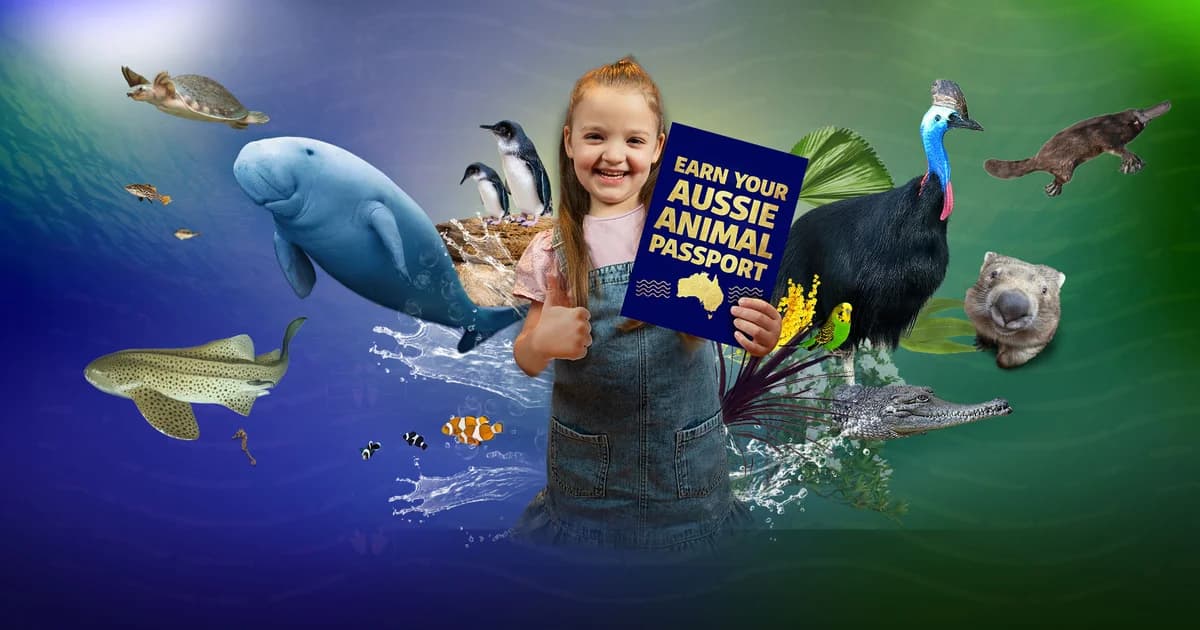
SEA LIFE Sydney Aquarium
SEA LIFE Sydney Aquarium — One of Australia's largest aquariums at Darling Harbour, housing over 13,000 animals across themed zones including the world's largest…
Theme Park · Wildlife Park in New South Wales

Find Nearby Accommodation
Hotels, apartments, hostels and luxury stays
We may earn a commission from bookings made through these links, at no extra cost to you.
About SEA LIFE Sydney Aquarium
One of Australia's largest aquariums at Darling Harbour, housing over 13,000 animals across themed zones including the world's largest Great Barrier Reef display outside of Queensland.
Tours & Experiences
 Selling fast
Shark Dive Xtreme at SEA LIFE Sydney Aquarium
4.9(151)
 Selling fast
Sydney and Bondi Big Bus Hop-on Hop-off Tour with Optional Cruise
4.0(2,780)

SEA LIFE Sydney Aquarium Entrance Ticket
3.6(569)
Powered by Viator · Affiliate link
SEA LIFE Sydney Aquarium sits at the edge of Darling Harbour in central Sydney, housing more than 13,000 animals across a series of themed zones. As one of the largest aquariums in the Southern Hemisphere, it draws visitors from across Australia and abroad — and with good reason. The facility's centrepiece is the world's largest display of Great Barrier Reef marine life outside of Queensland, making it a genuine opportunity to experience reef ecosystems without travelling to the tropics.
Whether you're visiting Sydney with children, travelling solo, or looking to spend a few hours exploring marine life between other city sights, the aquarium offers a substantial experience. Plan for around two to three hours to move through the exhibits comfortably — longer if you want to catch feeding sessions and take time reading the interpretive displays.
Entry is $51 for adults and $37 for children, and the aquarium is open daily from 10:00am to 5:00pm year-round. Guided tour experiences are also available, including the Shark Dive Xtreme for those after something more immersive.
What to See and Do
The aquarium is organised into distinct themed zones, each focused on a different marine environment or group of species. The Great Barrier Reef display is the standout — a vast recreation of reef habitats filled with corals, fish species, rays, and sharks. For visitors who haven't made it to the actual reef in Queensland, it provides a sense of the scale and biodiversity of that ecosystem in a way that photography or film can't quite replicate.
The underwater tunnel is one of the most popular features in the entire facility, and for good reason. Walking through it, you're surrounded on three sides by water, with sharks, rays, and large fish moving overhead and alongside you. It's immersive in a way that flat-glass tank viewing isn't, and it tends to draw the biggest crowds. Getting there early in your visit — ideally when the aquarium first opens — gives you more space to take it in before the main crowd arrives.
Touch pools offer a more hands-on experience, particularly appealing for younger children. These interactive areas allow visitors to handle certain marine creatures under supervision, which tends to be a highlight for kids who engage better through touch than observation.
Feeding sessions run at scheduled times throughout the day, and the animals' behaviour during these periods is noticeably different from quieter moments. Check the daily feeding schedule when you collect your entry ticket — staff should be able to tell you which exhibits are active when. These sessions also attract smaller crowds than the major displays, so timing your visit to certain tanks around feeding times can mean a less congested experience.
Photography is a popular activity throughout the aquarium. The lighting and glass present some challenges — reflections and glass glare can interfere with shots — but a camera with adjustable flash settings helps, and a polarising filter is worth using if you have one available.
For visitors with an interest in marine conservation, the aquarium incorporates educational content throughout its displays, including information about threatened species and reef ecosystems. This is woven into the visitor experience rather than presented as a separate exhibit.
History
SEA LIFE Sydney Aquarium opened in 1988, making it Australia's first major oceanarium. It relocated to its current Darling Harbour location in 1991 and has grown considerably since then. The facility is now part of the global SEA LIFE network, operated by Merlin Entertainments, though its focus on Australian marine environments — particularly the Great Barrier Reef — gives it a distinct identity within that broader brand.
The aquarium's Darling Harbour location places it within a precinct that has been central to Sydney's tourism and leisure infrastructure since the late 1980s. Its position alongside the waterfront, and in close proximity to other major Sydney attractions, has made it a consistent feature of visits to the city for more than three decades.
Over the years the facility has expanded its marine conservation and education programs, and it has positioned itself as more than a display space — though visitor enjoyment remains the primary function of a trip there.
Getting There and Access
The aquarium's location at Darling Harbour makes it highly accessible from central Sydney without a car.
If you're coming from Circular Quay — a common starting point for Sydney visitors — the walk takes roughly 15 to 20 minutes along the waterfront and through the CBD. From Town Hall Station it's closer to 10 minutes on foot. The Darling Harbour light rail stop puts you practically at the door.
If you're driving, multiple paid car parks serve the Darling Harbour precinct, including Harbourside, Gantry, and others nearby. Expect to pay in the range of $25–$35 per day depending on how long you stay. The precinct has extensive parking capacity, but spaces fill quickly during school holidays and busy weekends, so arrival timing matters. Disabled parking is available near the entry. Given the cost and availability challenges of parking, public transport or a rideshare is worth considering — it's typically cheaper and removes the uncertainty of finding a space.
The aquarium is fully wheelchair accessible and pram friendly, making it straightforward to navigate with young children or visitors with mobility requirements. Lockers are available on-site if you need to store bags or belongings during your visit.
Visitor Tips
A few practical considerations will make a meaningful difference to your experience here.
Arrive before 11am. The aquarium opens at 10:00am, and the hour between opening and 11am is consistently quieter than the rest of the day. School groups and larger tour parties tend to arrive mid-morning, so getting in ahead of them means more space at the popular exhibits — particularly the underwater tunnel and the Great Barrier Reef zone.
Go to the underwater tunnel first. It's the most popular feature in the building. Heading there at the start of your visit, before the main crowd disperses through the exhibits, gives you the best chance of experiencing it without being pressed on all sides.
Check the feeding schedule on entry. The daily schedule is worth picking up as soon as you arrive. Feeding sessions attract visitors, but they're also among the more interesting times to observe the animals. Planning your route around the schedule can help you see more without backtracking.
Allow at least two hours; three if you're thorough. Two hours is enough to move through the main exhibits at a reasonable pace. If you have children who want to linger at the touch pools, if you're interested in reading the interpretive content in detail, or if you want to catch a feeding session, budget closer to three hours.
Visit the gift shop at the end. It's located near the exit, which makes this straightforward anyway — but there's no reason to be carrying merchandise around for the duration of your visit.
Food options. There's a café on-site serving light meals, snacks, and drinks. You can also bring your own food — eating areas are available inside the aquarium. There are no picnic facilities outside the building, so if you're planning to eat al fresco at Darling Harbour more broadly, you'll need to find a spot in the wider precinct.
Photography. Aquarium photography is trickier than it looks. Glass reflections are the main obstacle. If you have a polarising filter, use it. If you're using a phone or camera without one, minimising flash and getting the lens as close to the glass as possible (without touching it) can help reduce glare.
Best Time to Visit
The aquarium is open daily year-round, so there's no closed season to plan around. The more important variable is crowd levels.
Weekday mornings between Tuesday and Friday — particularly the 10:00am to 11:00am window — are the quietest times. School groups typically book mid-morning slots and don't tend to arrive right at opening, so the early period gives you a head start.
The two busiest periods of the year are the summer school holidays (late December through January) and the autumn half-term break (September to October). If your visit falls during either of these periods, arriving at opening time becomes more important, not less. Weekend visits year-round are noticeably busier than weekdays.
For visitors with flexibility in their schedule, a Tuesday, Wednesday, or Thursday morning during a non-school-holiday period offers the most comfortable experience.
Nearby Attractions
Darling Harbour is one of Sydney's most concentrated precincts for attractions, which makes it easy to combine a visit to SEA LIFE with other nearby experiences.
The Australian National Maritime Museum is a short walk along the waterfront, as is Madame Tussauds Sydney and the Chinese Garden of Friendship. Wild Life Sydney Zoo, which focuses on Australian terrestrial animals, is immediately adjacent to the aquarium and run by the same operator — combination tickets are sometimes available. The broader Darling Harbour waterfront has a range of cafés and restaurants if you're planning a meal around your visit.
The Sydney CBD, Barangaroo, and the broader foreshore walk toward the Rocks and Circular Quay are all accessible on foot from Darling Harbour, making the precinct a practical base for a full day in central Sydney.
Getting There
Located at Darling Harbour in central Sydney. Walk from Circular Quay (15-20 minutes), Town Hall Station (10 minutes), or Darling Harbour light rail stop. Extensive paid parking available at Darling Harbour precinct car parks. No public beach or harbour swimming at this location — it's an urban aquarium.
Parking
Multiple paid car parks at Darling Harbour precinct (Harbourside, Gantry, and others) — expect $25–$35 per day depending on stay duration. Parking capacity is extensive but fills quickly during school holidays and weekends. Disabled parking available near entry. Consider public transport or rideshare to avoid parking costs ($10–15).
Nearest airport
Visitor Tips
- •Arrive early (before 11am) to beat school groups and queues at popular displays like the Great Barrier Reef zone
- •Head to the underwater tunnel first while crowds are smaller — it's the most popular feature
- •Allocate at least 2 hours; 3 hours if you want to watch feeding times and read displays thoroughly
- •Bring a camera with good flash settings for aquarium photography — polarising filters help reduce glass glare
- •Visit the gift shop near the end rather than the start to avoid carrying purchases
- •Check the daily feeding schedule on entry — these are quieter times to view certain exhibits
Tours & Experiences
Selling fastShark Dive Xtreme at SEA LIFE Sydney Aquarium
4.9(151)
Selling fastSydney and Bondi Big Bus Hop-on Hop-off Tour with Optional Cruise
4.0(2,780)
SEA LIFE Sydney Aquarium Entrance Ticket
3.6(569)
Powered by Viator · Affiliate link
Find Nearby Accommodation
Hotels, apartments, hostels and luxury stays
We may earn a commission from bookings made through these links, at no extra cost to you.
Quick Facts
At a Glance
The Place
- Significance
- National
Plan Your Visit
- Entry
- Paid
- Duration
- 2-3 hours
- Best Time
- Visit on weekday mornings (Tues–Fri, 10–11am) to avoid school holiday crowds and weekends. Summer school holidays (late Dec–Jan) and autumn half-term (Sept–Oct) are busiest. Open daily 10am–5pm year-round.
- Hours
- 10:00am - 5:00pm daily
Location
- Area
- Darling Harbour
- Region
- Sydney Inner City
- State
- New South Wales
Good to Know
Highlights
Activities
Family & Visitor Info
- Ages
- All ages — designed for families; particularly engaging for children aged 4–12, but toddlers and preschoolers enjoy the interactive touch pools and colourful displays.
- Shade/Cover
- Indoor
- Pram Friendly
- Yes
- Lockers
- Available
Food & Drink
Café on-site serves light meals, snacks, and drinks. BYO food permitted — eating areas available. No picnic facilities outside the aquarium.
Features
Facilities
Nearby
Campsites(5)
Trails(3)
Attractions(5)
Toilets(3)
Groceries(5)
Fuel(5)
Dump Points(5)
Torotoro
Free · 0.5km
North Ryde Caravan Dump Point
caravan-park · 10.1km
Beverly Hills Park
Free · 13.5km
Cheltenham Train Station
Free · 17km
Basin Campground
Free · 30.7km
Pubs(5)
Fast Food(5)
Golf Courses(5)
Wineries(5)
Weigh Stations(5)
National Parks(5)
Travellers also visited
Tap + to build a trip
Find Nearby Accommodation
Hotels, apartments, hostels and luxury stays
We may earn a commission from bookings made through these links, at no extra cost to you.
Nearby
Campsites(5)
Trails(3)
Attractions(5)
Toilets(3)
Groceries(5)
Fuel(5)
Dump Points(5)
Torotoro
Free · 0.5km
North Ryde Caravan Dump Point
caravan-park · 10.1km
Beverly Hills Park
Free · 13.5km
Cheltenham Train Station
Free · 17km
Basin Campground
Free · 30.7km