Find Nearby Accommodation
Hotels, apartments, hostels and luxury stays
We may earn a commission from bookings made through these links, at no extra cost to you.
Tours & Experiences
 Selling fast
Guided Electric Bike Tour of Sydney with Bluetooth helmets
4.9(123)
 Selling fast
Sydney Bike Tours
4.8(1,150)

Sydney Private Custom Tour: Highlights & Hidden Gems with a Local
4.8(142)

Sydney Combo: Morning Sightseeing to Bondi & Harbour Lunch Cruise
4.7(72)

Morning or Afternoon Half-Day Sydney City Sightseeing Tour
4.6(660)

Morning or Afternoon Highlights Tour in Sydney with a Local Guide
4.5(134)
Powered by Viator · Affiliate link
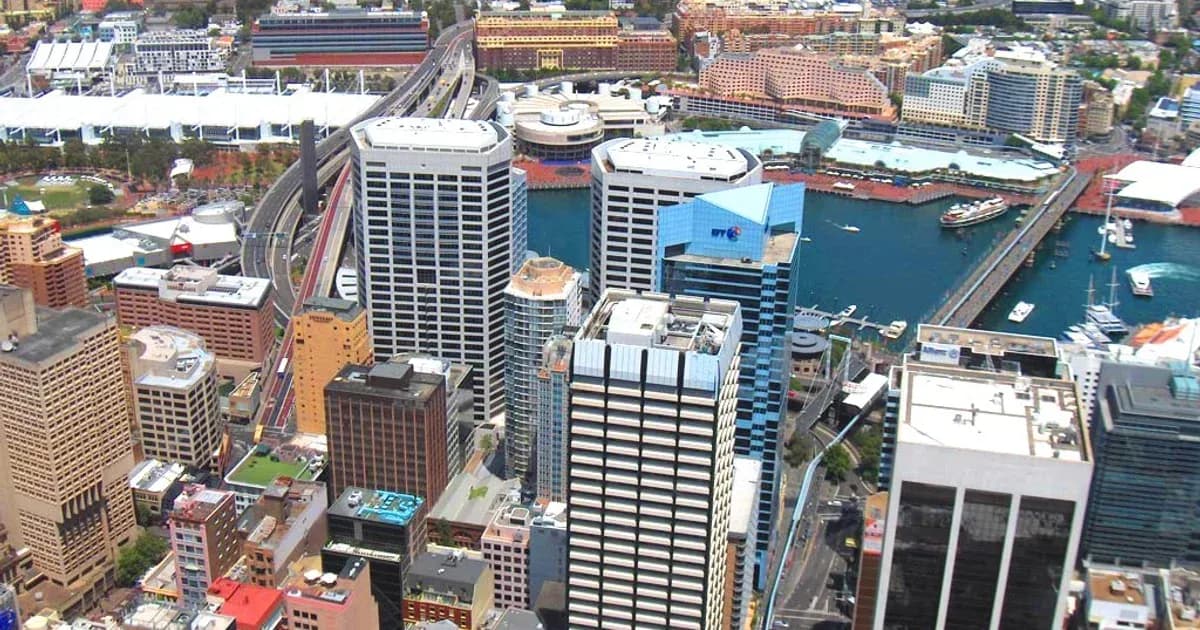
Darling Harbour sits on the western edge of Sydney's CBD, forming one of the city's most recognisable and well-used public precincts. Stretching along a sheltered inlet off Port Jackson, it draws visitors for its waterfront setting, cultural institutions, and easy access from the city centre. While it's perhaps better known as a dining and entertainment destination than a swimming spot, the harbour does offer water access — something worth exploring if conditions allow.
What to See and Do
The harbour precinct is home to several major museums and attractions that line its foreshore, making it a natural starting point for exploring Sydney's maritime and cultural offerings. The waterfront walkways are flat, wide, and well-maintained, so you can move comfortably between venues on foot.
Swimming is possible here, though it's not the primary draw. The water is accessible along sections of the foreshore, but conditions vary and you should check local council water quality reports before getting in. There's no surf to contend with, given the sheltered nature of the bay, but that doesn't mean conditions are always suitable — boat traffic and urban runoff can affect water quality at times.
The precinct is entirely wheelchair accessible and pram-friendly throughout, with smooth paths, ramps, and accessible facilities making it one of Sydney's more inclusive waterfront destinations.
If you'd prefer to explore the broader city from a different angle, guided bike tours depart from the Sydney area and cover the harbour precinct as part of wider city routes. These can be a practical way to cover more ground while getting context about the city's landmarks and layout.
History
Darling Harbour has been part of Sydney's working port infrastructure since the early 1800s, serving as a freight and industrial hub for much of its history. Wool, timber, and other goods moved through here as Sydney grew into a major colonial and commercial city.
The precinct underwent significant transformation during the 1980s and 1990s, when large-scale redevelopment converted former industrial land into a public leisure and cultural destination. The redevelopment was completed in time for Australia's Bicentenary celebrations in 1988, and the area has continued to evolve since. Despite its reinvention as a public space, parts of the harbour retain working maritime functions.
Getting There and Access
Darling Harbour is well-served by public transport. You can reach it by train, light rail, or bus from the Sydney CBD — it's a short walk or ride from Central Station and various city stops. Given the parking situation, public transport is the more practical option, particularly on weekends and public holidays.
If you're driving, follow signs from the Cahill Expressway or Broadway to the parking stations around the precinct. Capacity is high, but the car parks fill quickly during busy periods. Wheelchair accessible parking is available within the precinct. Expect to pay for parking regardless of which station you use.
Visitor Tips
- Check water quality before swimming. The harbour is an urban waterway, and conditions can vary. Local council reports are the most reliable source.
- Sun protection is essential. Shade is limited along the water's edge, and reflected glare off the water intensifies UV exposure.
- Arrive early on weekends. The precinct gets busy, and parking fills fast. A weekday morning visit is noticeably quieter.
- Food and drink. There are numerous waterfront cafés and restaurants throughout the precinct — you won't struggle to find somewhere to eat. There are no designated bring-your-own picnic areas, so if you're planning a self-catered visit, check current access arrangements.
- Accessibility. Wheelchair accessible paths and facilities are available throughout, making the precinct navigable for visitors with mobility needs.
Best Time to Visit
Late spring through to early autumn — roughly September to May — offers the warmest conditions if you're planning to swim. Sydney's summers can be hot, so early morning visits during this period are often the most comfortable. Weekday mornings are consistently quieter than weekends, when the precinct attracts large crowds, particularly in the warmer months.
Always check tide and weather conditions before visiting if swimming is part of your plan.
Warnings
Getting There
Located in Sydney's CBD. Easily accessible by train (Darling Harbour Station), light rail, or bus. By car, follow signs to Darling Harbour parking stations from the Cahill Expressway or Broadway.
Parking
Multiple paid car parks around the harbour precinct. High capacity but fills quickly on weekends and public holidays. Wheelchair accessible parking available. Consider public transport as an alternative during peak times.
Visitor Tips
- •Check swimming conditions and lifeguard presence before entering water
- •Wheelchair accessible paths and facilities throughout the harbour precinct
- •Arrive early on weekends to secure parking and avoid crowds
- •Water quality can vary — check local council reports before swimming
- •Bring sun protection; shade is limited on the water's edge
Find Nearby Accommodation
Hotels, apartments, hostels and luxury stays
We may earn a commission from bookings made through these links, at no extra cost to you.
Quick Facts
At a Glance
The Place
- Significance
- Local
Plan Your Visit
- Entry
- Free
- Duration
- 1-3 hours
- Best Time
- Late spring through early autumn (September to May) for warmest water. Weekday mornings are quieter than weekends. Check tide and weather conditions before visiting.
- Hours
- Open 24 hours.
Location
- Area
- Pyrmont
- Region
- Sydney Inner City
- State
- New South Wales
Good to Know
Highlights
Activities
Family & Visitor Info
- Ages
- All ages
- Shade/Cover
- Limited shade
- Pram Friendly
- Yes
Food & Drink
Numerous waterfront cafés and restaurants; no designated picnic areas for food you've brought
Features
Facilities
Travellers also visited
Tap + to build a trip
Find Nearby Accommodation
Hotels, apartments, hostels and luxury stays
We may earn a commission from bookings made through these links, at no extra cost to you.
Nearby
Campsites(5)
Trails(3)
Attractions(5)
Toilets(3)
Groceries(5)
Fuel(5)
Dump Points(5)
Torotoro
Free · 0.3km
North Ryde Caravan Dump Point
caravan-park · 9.8km
Beverly Hills Park
Free · 13.4km
Cheltenham Train Station
Free · 16.7km
Basin Campground
Free · 30.5km
Pubs(5)
Fast Food(5)
Subway Sydney 7
Subway · 0.2km
Subway Sydney 4
Subway · 0.5km
Wynyard Railway
McDonald's · 0.6km
The Strand Arcade NSW
McDonald's · 0.7km
Martin Place Metro
McDonald's · 0.7km