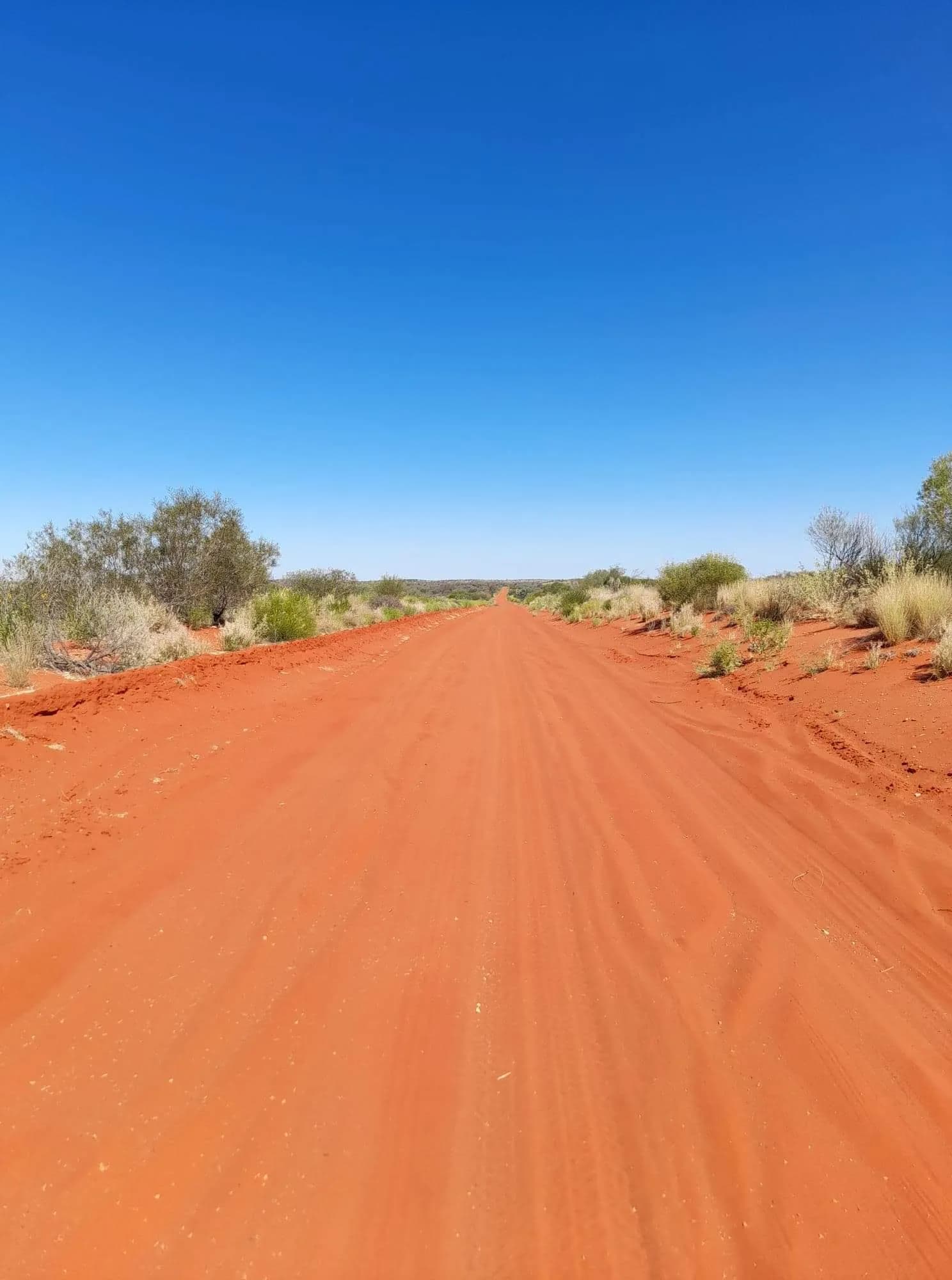
At a Glance
History of the Finke Track
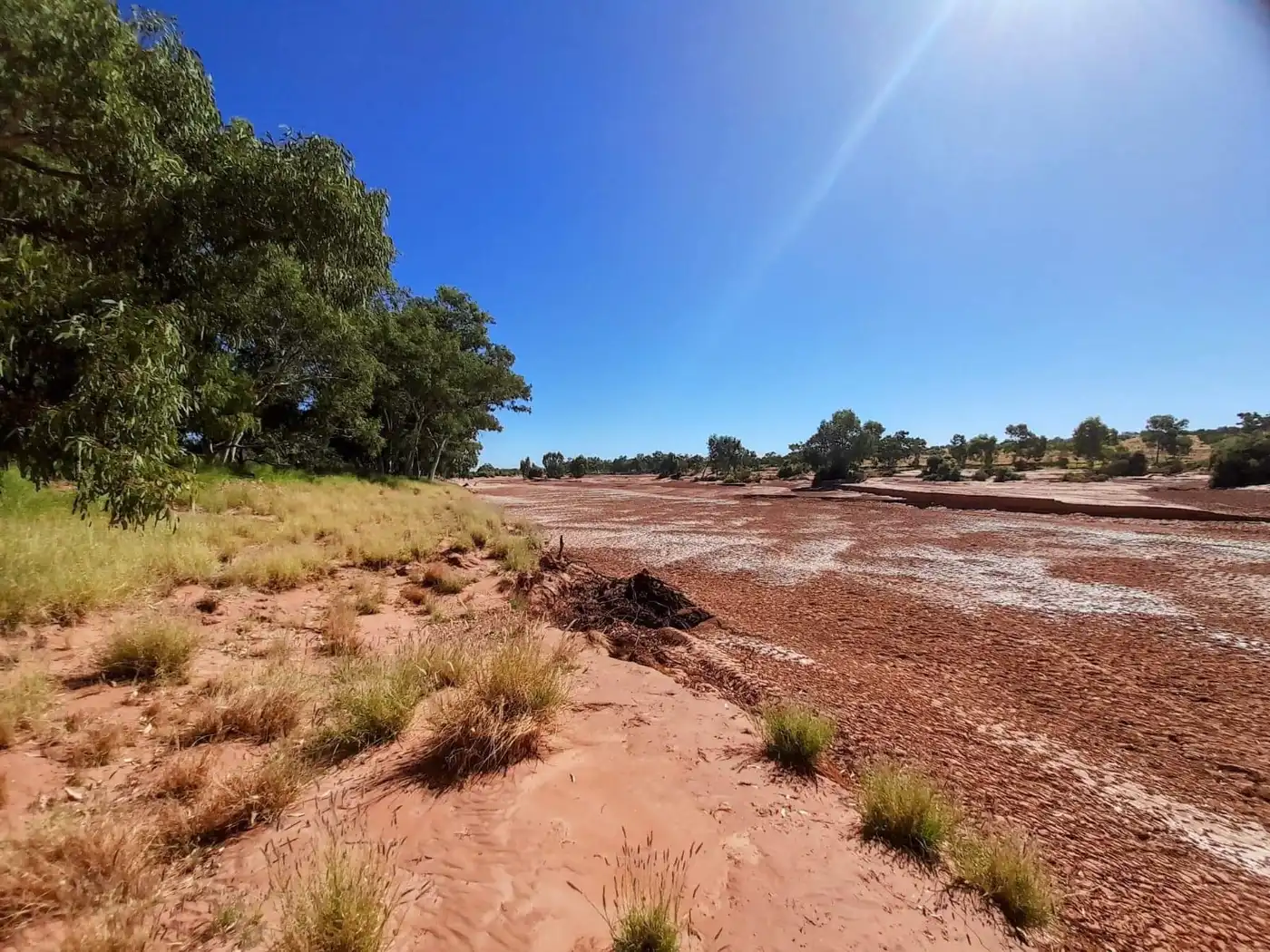 The Finke Track follows the route of the original narrow-gauge Ghan railway — officially the Central Australia Railway — which connected Port Augusta in South Australia to Alice Springs in the Northern Territory. Construction began in 1878 from Port Augusta, with the line reaching Oodnadatta by 1889 before funding ran out. It took another 38 years before the final extension to Alice Springs was completed on 6 August 1929.
The railway earned its nickname from Afghan cameleers who had worked the remote trade routes before the line was built. A railwayman at Quorn in 1923 saw an Afghan passenger praying beside the carriages and dubbed it the "Afghan Express" — eventually shortened to "The Ghan". During World War II, traffic surged from three trains per week to 56, straining the lightweight track infrastructure beyond its limits.
The original route was plagued by flooding. The track had been laid close to waterways so steam engines could take on water, but this meant it was repeatedly washed out during heavy rains. In 1953, passengers on the Finke line were stranded for four days after floodwaters destroyed sections of track. The bridges over the Finke River were destroyed and rebuilt in 1962, 1967, and again in 1974. The last narrow-gauge Ghan departed Marree at 1:16am on 25 November 1980, replaced by a new standard-gauge line routed 160 kilometres to the west, safely away from the floodplains.
Today, remnants of the old railway line — sidings, fettler's cottages, telegraph stations, and abandoned infrastructure — can still be found along the track. The South Australian and Northern Territory governments formally established the Old Ghan Heritage Trail in 2001, preserving this corridor for travellers and adventurers. The race course sections still carry the names of the original railway sidings: Deep Well, Rodinga, Bundooma, Mount Squires, and Finke.
The Finke Desert Race
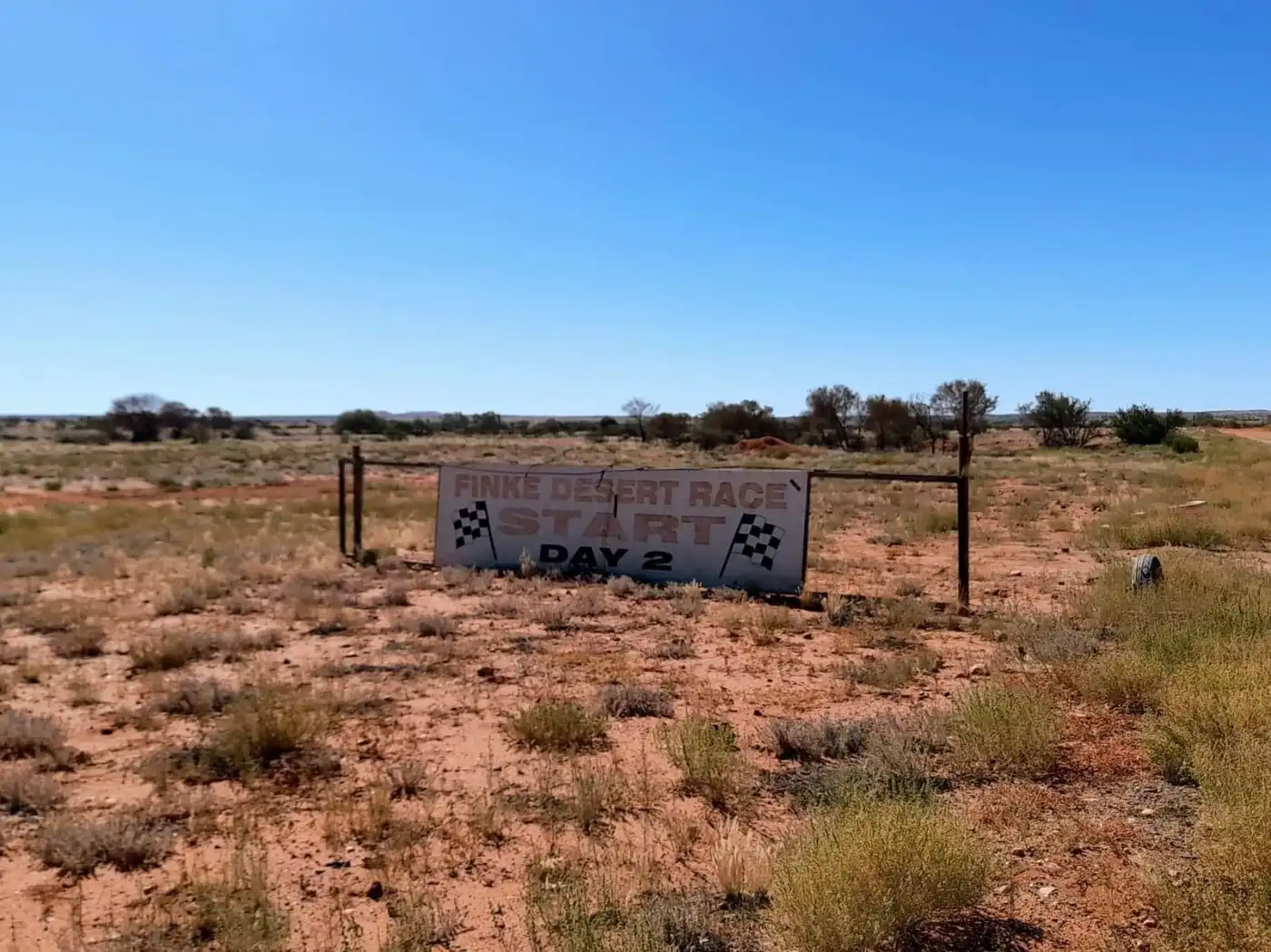 In 1976, a group of local Alice Springs motorcycle riders set themselves a challenge: race from the Alice Springs Inland Dragway to the remote community of Finke and back. That first year, just 56 competitors lined up. What started as an informal "there and back" dare has grown into one of the most prestigious off-road motorsport events on the planet, now attracting over 800 competitors and an estimated 25,000 spectators during race week.
The race is held annually on the King's Birthday long weekend in June. It follows a four-day format: a prologue time trial on Saturday to set the starting order, followed by the two-day out-and-back race — Day 1 from Alice Springs to Finke (229 kilometres), Day 2 the return leg. Cars and off-road buggies were introduced in 1988, and the event now features categories for bikes, quads, cars, buggies, and trophy trucks.
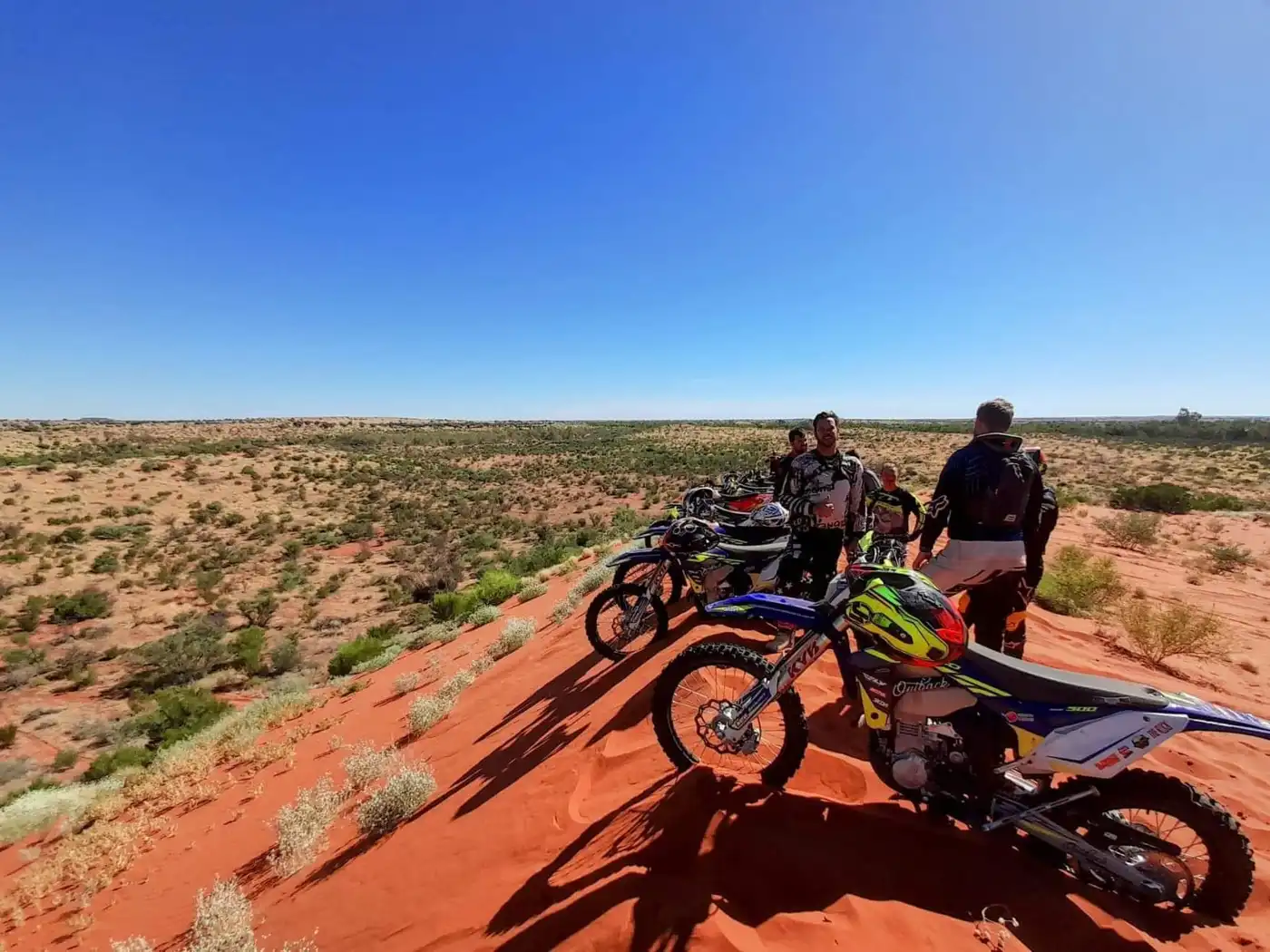
The course snakes through five sections of typical outback terrain: red dirt, sand, spinifex, mulga, and desert oaks. What makes it brutally difficult is the combination of bulldust (fine powdery dust that conceals holes and creates zero-visibility conditions), whoops reaching two to three metres in height, severe corrugations, and sandy river crossings. Top competitors average over 120 km/h across the combined legs. The track deteriorates progressively as each competitor passes, meaning riders with later start positions face significantly more churned-up terrain.
Kings and Queens of the Desert
Since 2005, the race has crowned separate "King of the Desert" titles for bikes and cars, each carrying a $10,000 prize. The title is arguably the most sought-after prize in Australian off-road racing.
The most dominant rider in Finke history is Toby Price from New South Wales. Price holds six bike victories (2010, 2012, 2014, 2015, 2016, 2018) and three car wins (2021, 2022, 2023) — nine Finke titles in total, the all-time record. He is the only competitor to have won in both bike and car categories, and went on to become the first Australian to win the Dakar Rally.
David Walsh holds the record for consecutive bike wins with five straight titles from 2019 to 2024, all on a KTM 500 EXC-F. He set the fastest combined time record of 3 hours 35 minutes 45 seconds in 2022, equalling Randall Gregory's legendary run of five consecutive wins from 1991 to 1995 on a Honda CR500. Walsh's streak was finally broken in 2025 by Corey Hammond.
In the car categories, Shannon and Ian Rentsch have been the dominant force with five wins in Jimco and Chenowth buggies. The 2025 cars winner was Travis Robinson in a 7.0-litre V8 Mason Trophy Truck, finishing in 3 hours 24 minutes 35 seconds. The 2025 Queen of the Desert was Madison Healey on a KTM 350 EXC-F.
Race Bikes and Vehicles
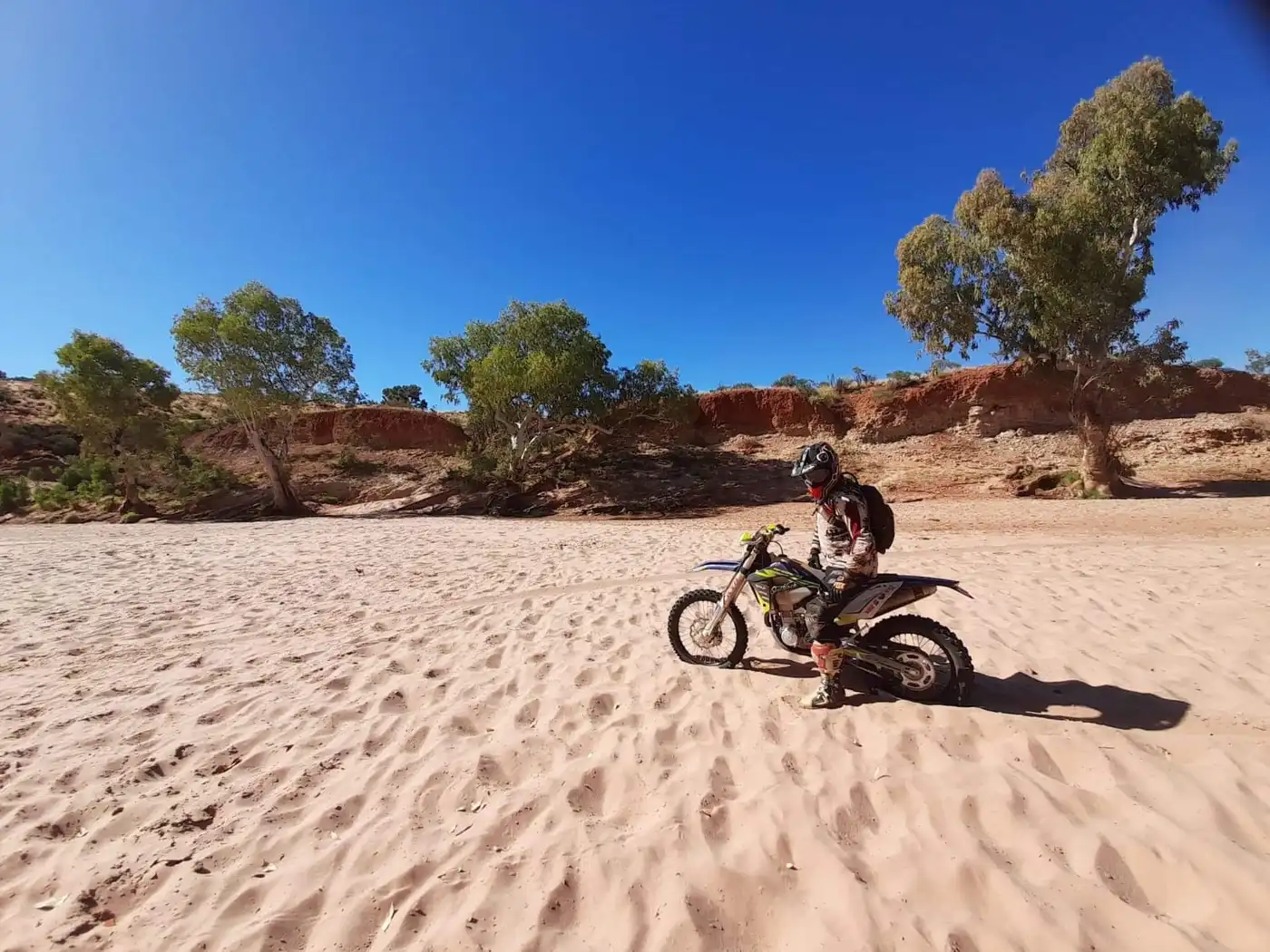 The KTM 500 EXC-F dominates the modern era of Finke. Used by Price, Walsh, and Hammond, it has become the weapon of choice thanks to its balance of power, reliability, and desert-tuned torque. Common modifications include steering dampers (considered essential), Vortex ECU with desert torque maps, heavy-duty tubes, upgraded air filtration, and suspension specifically tuned for whoops and corrugations. The most popular bike class is Class 5 (251–450cc four-stroke) with 89 riders in 2024.
In the car categories, Mason and TSCO Trophy Trucks have overtaken traditional Jimco buggies as the platform of choice for recent winners. Engines typically range from 2,000cc to 7,000cc, often turbocharged. For the 2026 event — the race's 50th anniversary — entries have already hit capacity with 878 bike entries against a 750-bike cap and 228 car entries for 200 places, with substantial waitlists for both.
The Finke River
 The Finke River — known as Larapinta in the Western Arrernte language, meaning "Salt River" — is regarded as one of the oldest river systems on Earth, with its course established during the Alice Springs Orogeny between 400 and 300 million years ago. As the MacDonnell Ranges slowly uplifted around it, the proto-Finke maintained its course by cutting downward through the rising ridges rather than diverting — a geological process called antecedence that explains why Finke Gorge appears structurally incongruous with the surrounding landscape.
Named by explorer John McDouall Stuart in 1860 after his patron William Finke, the river stretches approximately 750 kilometres from its headwaters near Mount Zeil in the MacDonnell Ranges toward Lake Eyre in South Australia. It is intermittent — flowing for only a few days per year — with water usually disappearing into the sands of the Simpson Desert and rarely reaching Lake Eyre. Despite this, permanent waterholes and underground sources sustain life along its course, including the approximately 3,000 adult red cabbage palms in Palm Valley within Finke Gorge National Park.
Competitors in the Finke Desert Race cross the sandy Finke riverbed just north of Aputula near the finish line — a fitting finale on one of the most ancient waterways on the planet.
Climate and Best Time to Travel
The Finke Track sits in a semi-arid zone receiving less than 250mm of rainfall annually, mostly between October and March. Summer temperatures are extreme — Finke holds the Northern Territory's highest ever recorded temperature of 48.3°C, set on 1–2 January 1960. Winter days are mild at around 20°C, but overnight temperatures can drop below 5°C, and frosts are not uncommon.
The best window for travelling the track is May to September, when conditions are dry and temperatures manageable. The track becomes impassable during the wet season (November to March) due to flooding, and is closed to public access for approximately one week during the Finke Desert Race in June. If you are visiting in June, the race itself is an incredible spectacle — but plan your track trip for another time.
Waypoints
Vehicle Requirements
- Snatch strap
- Rated shackles
- Shovel
- Tyre deflator/inflator
- Tyre repair kit
- UHF radio (channel 10)
- Satellite phone or EPIRB/PLB recommended
- 2 spare tyres
- Fan belt
- Radiator hoses
- Basic tool kit
- GPS/offline maps essential
- Sun protection
- First aid kit
Safety & Preparation
Emergency Services: RFDS (Royal Flying Doctor Service) covers this area. Nearest hospital is Alice Springs Hospital (Gap Rd, Alice Springs).
Communication: No mobile phone reception for the majority of the route. Carry a satellite phone, EPIRB, or PLB. UHF radio channel 10 is monitored by other travellers.
Travel in groups: Always travel with at least one other vehicle. Solo travel is strongly discouraged.
Notify someone: Lodge a travel plan with NT Police or inform a reliable contact of your itinerary and expected return date.
Heat: Summer temperatures regularly exceed 45°C. Carry at least 10 litres of water per person per day. Never leave your vehicle if stranded.
Seasonal Guide
Track is impassable during wet season (Nov-Mar) due to flooding. The Finke Desert Race in June closes the track to public access for approximately one week.
Highlights
Permits & Access
No formal permit required, but check road conditions with NT Department of Infrastructure before departure. Track may be closed after rain.
Quick Info
- Start
- Alice Springs
- End
- Finke (Aputula)
- Driving Time
- 12h
- Region
- Central Australia