Waitangi Treaty Grounds
Waitangi Treaty Grounds — Historic site in Bay of Islands, northland.
Historic Site · Monument in Northland
Photo: Wikimedia Commons (CC-BY-SA)
 Written by Ben Cole· Updated Apr 2026
Find Nearby Accommodation
Hotels, apartments, hostels and luxury stays
We may earn a commission from bookings made through these links, at no extra cost to you.
About Waitangi Treaty Grounds
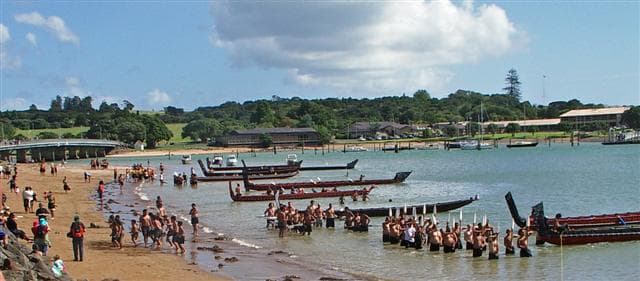
The birthplace of New Zealand as a nation. The Treaty of Waitangi was signed here on 6 February 1840 between the British Crown and Māori chiefs. The grounds include the Treaty House (built 1833-1834), Te Whare Rūnanga (the carved meeting house), the 35.7-metre waka taua Ngātokimatawhaorua, and the flagstaff marking the spot where the treaty was signed.
Few places in New Zealand carry the historical weight of the Waitangi Treaty Grounds. Situated on the shores of the Bay of Islands, this is where the Treaty of Waitangi was signed on 6 February 1840 — an agreement between the British Crown and Māori chiefs that effectively established New Zealand as a nation. Today the grounds preserve the original buildings and structures from that era, alongside later additions that honour Māori culture and heritage. For anyone interested in understanding how New Zealand came to be, this is the place to start.
Entry costs $60 for adults, with children under 15 entering free. The grounds are open daily from 9:00am to 5:00pm, and a visit of two to four hours is recommended to do the site justice.
What to See and Do
The grounds bring together several significant structures, each telling a different part of the story.
The Treaty House is the oldest European building on the site, constructed between 1833 and 1834 as the home of the British Resident. It was on the lawn in front of this house that the treaty was signed, and the building has been carefully preserved to reflect its early colonial character. The flagstaff nearby marks the precise spot where the signing took place and where the Union Jack was raised — a detail worth noting as you walk the grounds.
Te Whare Runanga, the elaborately carved Māori meeting house, stands in contrast to the colonial architecture of the Treaty House. Completed in 1940 to mark the centenary of the treaty, it represents iwi from across New Zealand through its carvings, each panel contributed by a different tribe. It's one of the most significant carved meeting houses in the country, and guided tours typically provide the context needed to appreciate what you're looking at.
The 35-metre waka taua (war canoe) is another highlight. An impressive example of traditional Māori craftsmanship and maritime heritage, it's large enough to have required a purpose-built storage building to house it. The scale alone makes it worth seeing.
Cultural performances are available on-site and add around 30 minutes to your visit. These offer a more direct engagement with Māori performance traditions, and are a worthwhile addition if your schedule allows.
History
The events of 6 February 1840 unfolded on this patch of ground in the Bay of Islands, then one of the most active centres of European contact in the Pacific. The treaty signed here was an agreement between Lieutenant Governor William Hobson, representing the British Crown, and a significant number of Māori chiefs. It addressed questions of sovereignty, land ownership, and the rights of Māori people — questions that have remained central to New Zealand's national identity and legal history ever since.
The Treaty House predates the signing, having been built in 1833–34 for British Resident James Busby. Te Whare Runanga came a century later, completed in 1940 as a centenary commemoration. The grounds are managed today by the Waitangi National Trust and are heritage listed, with the 1840 date of significance formally recognised. The annual Waitangi Day commemorations on 6 February draw large crowds and include ceremonial and cultural events that reflect both the ongoing significance of the treaty and the complex conversations it continues to generate.
Getting There and Access
The grounds are in Waitangi village, about 2 kilometres north of Paihia town centre in the Bay of Islands. From Paihia, follow Waitangi Bridge road north — it's a straightforward drive. From Auckland, allow roughly four hours via State Highway 1 heading north.
Public transport options to the site are limited, and a hire car or tour bus is the most practical way to get here for most visitors.
Free on-site parking is available with reasonable capacity, including accessible spaces and dedicated coach and bus parking. The car park is about 100 metres from the visitor centre, and overflow parking is available in nearby Waitangi village if needed.
The grounds are wheelchair accessible and pram friendly, with facilities including a visitor centre, café, toilets, and a gift shop on-site.
Visitor Tips
A guided tour is strongly recommended over self-guided exploration. The treaty and the structures on the grounds carry layers of historical and cultural meaning that are easy to miss without knowledgeable commentary — this is one of those places where context genuinely transforms the experience.
If you're visiting independently, arriving between 9:00am and 10:00am helps you get ahead of school groups and tour buses, which tend to arrive mid-morning. Set aside a minimum of two to three hours, more if you're planning to take in a cultural performance.
Comfortable walking shoes are worth wearing — moving between buildings involves outdoor paths, and the grounds cover a fair amount of ground.
Families with younger children may find full guided tours a stretch in terms of length; self-guided exploration suits that age group better, and the site is genuinely accessible for all ages.
The on-site café serves light meals and drinks, there are picnic areas on the grounds, and BYO is welcome if you'd prefer to bring your own food.
Best Time to Visit
The grounds are worth visiting year-round, but 6 February — Waitangi Day — is the most significant date in the calendar. Special ceremonies and cultural events mark the anniversary of the treaty signing, drawing large crowds. If you plan to visit on that date, be prepared for a busy site and consider arriving early. For a quieter experience, any other time of year suits well, with the Bay of Islands generally at its warmest from December through to March.
Getting There
Located in Waitangi village, 2km north of Paihia town centre in the Bay of Islands. From Paihia: follow Waitangi Bridge road north. From Auckland: 4-hour drive via SH1 north. Limited public transport; hire car or tour bus recommended.
Parking
Free car park on-site with good capacity for standard vehicles and accessible spaces. Dedicated coach/bus parking available. Overflow parking in nearby Waitangi village if needed. Carpark is 100m walk to visitor centre.
Visitor Tips
- •Book a guided tour to understand the treaty's significance—self-guided visits miss crucial context
- •Visit early (9-10am) to avoid school groups and tour buses
- •Allow 2-3 hours minimum; cultural performances add 30 minutes
- •Wear comfortable shoes for outdoor walking between buildings
- •February 6 (Waitangi Day) sees large crowds and special events—plan accordingly
Find Nearby Accommodation
Hotels, apartments, hostels and luxury stays
We may earn a commission from bookings made through these links, at no extra cost to you.
Quick Facts
At a Glance
The Place
- Significance
- National
Plan Your Visit
- Entry
- Child $0
- Duration
- 2-4 hours
- Best Time
- Year-round, Waitangi Day (6 February) for celebrations
- Hours
- 9:00am - 5:00pm daily
Location
- Region
- Bay of Islands
- State
- Northland
Good to Know
Highlights
Activities
Family & Visitor Info
- Ages
- All ages. Children under 15 free entry. Younger children may find guided tours lengthy; self-guided exploration suits families better.
- Shade/Cover
- Moderate shade
- Pram Friendly
- Yes
Food & Drink
Café on-site serves light meals and drinks. Picnic areas available on grounds. BYO welcome.
Features
Facilities
Nearby
Campsites(5)
Trails(3)
Find Nearby Accommodation
Hotels, apartments, hostels and luxury stays
We may earn a commission from bookings made through these links, at no extra cost to you.