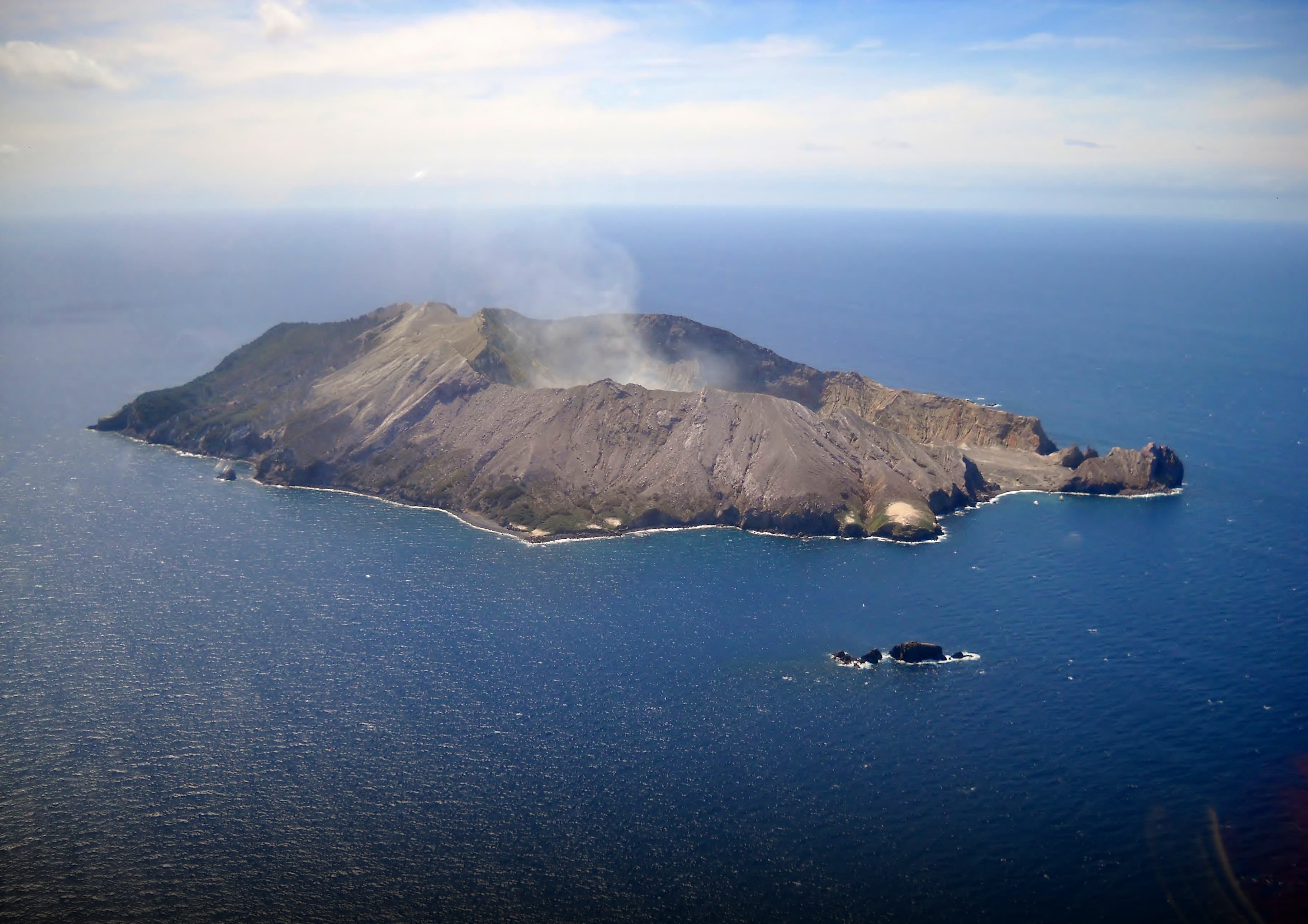
White Island / Whakaari
Whakaari
White Island / Whakaari — Island in Bay of Plenty, bay-of-plenty.
Island in Bay of Plenty
Photo: Wikimedia Commons (CC BY-SA)
 Written by Mia & Tom Hartley· Updated Apr 2026
Find Nearby Accommodation
Hotels, apartments, hostels and luxury stays
We may earn a commission from bookings made through these links, at no extra cost to you.
About White Island / Whakaari
New Zealand's most active cone volcano, sitting 48km offshore in the Bay of Plenty. White Island/Whakaari is the tip of a large submarine volcano, with 70% submerged. The island features a dramatic active crater, steaming vents, an acid crater lake, and ruined sulphur mining infrastructure from the early 1900s.
Whakaari — known in English as White Island — is New Zealand's most active cone volcano, rising from the Bay of Plenty approximately 48 kilometres offshore from Whakatāne. What you see above the waterline is just 30% of the structure; the remaining 70% is a massive submarine volcano extending deep beneath the ocean surface. The island is characterised by its dramatic active crater, steaming hydrothermal vents, an acid crater lake, and the rusted remnants of early 20th-century sulphur mining operations — a landscape unlike anything else accessible in New Zealand.
Access to the island is tightly controlled and has been significantly restricted since a fatal eruption in December 2019. For travellers hoping to visit, careful planning and up-to-date information are essential.
History
Māori knew this place as Whakaari — meaning "to make visible" or "to dramatise" — a name that speaks to the island's constant volcanic performance. Sulphur mining operations began on the island in the early 1900s, and the remnants of that infrastructure are still visible today: ruined buildings and machinery slowly being consumed by the corrosive volcanic environment. The mining era came to an abrupt end when a eruption killed workers on site, and the island's commercial history largely ceased.
The island has remained one of New Zealand's most closely monitored volcanic sites. In December 2019, an eruption while a tour group was on the island killed 22 people. The tragedy prompted permanent changes to how and when the public can access Whakaari, with ongoing volcanic activity monitoring now dictating whether any tours are permitted to land.
What to See and Do
When access is permitted, tours centre on the active crater and the otherworldly volcanic landscape. Steaming vents emit gases across the crater floor, the acid lake shifts in colour and intensity with volcanic activity, and the sulphur-encrusted terrain gives the island a stark, industrial quality unlike typical island scenery. The ruins of the old sulphur mining infrastructure add a historical dimension to the landscape.
Two main ways to experience Whakaari are available through licensed operators: boat tours that include a guided landing on the island, and scenic flights that allow aerial views of the crater and surrounding marine environment without landing. Photography is one of the primary activities for visitors, and the crater, steam plumes, and coastal scenery offer strong subjects — a camera with a good zoom lens is worth bringing.
Getting There and Access
All access to Whakaari is through licensed tour operators — there is no independent access to the island. Most tours depart from Whakatāne Harbour, roughly 50 kilometres from the island by sea. Whakatāne is the nearest major town and your base for any visit.
Free parking is available at Whakatāne Harbour, with accessible spaces included. During peak summer season, the carpark fills quickly, so arriving early is advisable. Overflow parking is available in town if needed.
Public transport to Whakatāne is limited, so hiring a car or arranging transfers through your tour operator is the most practical approach for most travellers.
Visitor Tips
- Book well in advance. Tours are subject to both weather conditions and volcanic activity alerts. Operators can cancel at short notice, and popular summer departures fill quickly.
- Check current access status. Before booking, review updates from GeoNet and the Department of Conservation — access restrictions change depending on volcanic monitoring data.
- Ages 12 and up are typically accepted on tours, though minimum age requirements vary by operator. The rough sea conditions and volcanic hazards make the experience unsuitable for young children.
- Bring seasickness medication if you're prone to motion sickness. The open-water crossing can be rough even in good conditions.
- Dress in layers. Even in summer, offshore winds make the boat crossing and time on the island considerably colder than conditions on the mainland.
- Bring your own food and water. There are no food facilities on the island, and while some operators provide refreshments on board, it's worth confirming this when you book.
- Toxic gases are present in the volcanic environment. Tour operators provide appropriate safety equipment, but this is a genuine hazard that warrants awareness.
Best Time to Visit
December through March offers the most favourable conditions for reaching Whakaari — calmer seas improve the boat crossing and visibility tends to be better for photography. Winter months from June to August bring rougher seas that frequently lead to tour cancellations.
Morning departures generally experience calmer water than afternoon departures, and weekday tours tend to be less crowded than weekend options. That said, volcanic activity levels are the overriding factor in whether any visit proceeds — weather and season are secondary considerations.
Nearby Attractions
Whakatāne itself is worth exploring as a base. The Bay of Plenty coastline offers beaches, and the wider region includes access to the Rotorua geothermal area, which provides a very different but thematically related volcanic experience — on dry land and with far fewer restrictions.
Warnings
Getting There
Depart from Whakatāne (nearest major town, 50km away) via licensed tour operators. Tours are by boat or scenic flight only; no independent access. Most tours operate from Whakatāne Harbour. Public transport limited—hire a car or arrange shuttles with your tour operator.
Parking
Free parking available at Whakatāne Harbour where tours depart. Capacity varies by carpark; arrive early during peak summer season. Accessible parking available. Overflow parking in town if needed.
Visitor Tips
- •Book tours well in advance—access is weather and volcanic activity dependent
- •Most tours depart from Whakatāne; wear warm layers even in summer as it's windy offshore
- •Bring seasickness medication if prone—the boat ride can be rough
- •Tours typically include landing on the island with a guide; some offer scenic flights only
- •Camera with good zoom recommended for photography of the crater and steam vents
- •Check Department of Conservation updates before booking—access restrictions change based on volcanic monitoring
Find Nearby Accommodation
Hotels, apartments, hostels and luxury stays
We may earn a commission from bookings made through these links, at no extra cost to you.
Quick Facts
At a Glance
Identity
- Traditional Name
- Whakaari
The Place
- Significance
- National
Plan Your Visit
- Entry
- Paid
- Duration
- 2-3 hours (when accessible)
- Best Time
- December to March (summer) for calmest sea conditions and best visibility. Avoid winter (June–August) for rough seas. Weekday tours often less crowded than weekends. Morning departures typically have calmer waters than afternoon.
Location
- Region
- Bay of Plenty
- State
- Bay of Plenty
Good to Know
Highlights
Activities
Family & Visitor Info
- Ages
- Ages 12+ typically (check with tour operator for minimum age). Not suitable for very young children due to rough sea conditions and volcanic hazards.
- Shade/Cover
- No shade
- Pram Friendly
- No
Food & Drink
Bring own snacks and water. Most tours are 2–3 hours; some operators provide refreshments—check when booking. Limited facilities on the island itself.
Features
Nearby
Trails(1)
Attractions(1)
Find Nearby Accommodation
Hotels, apartments, hostels and luxury stays
We may earn a commission from bookings made through these links, at no extra cost to you.