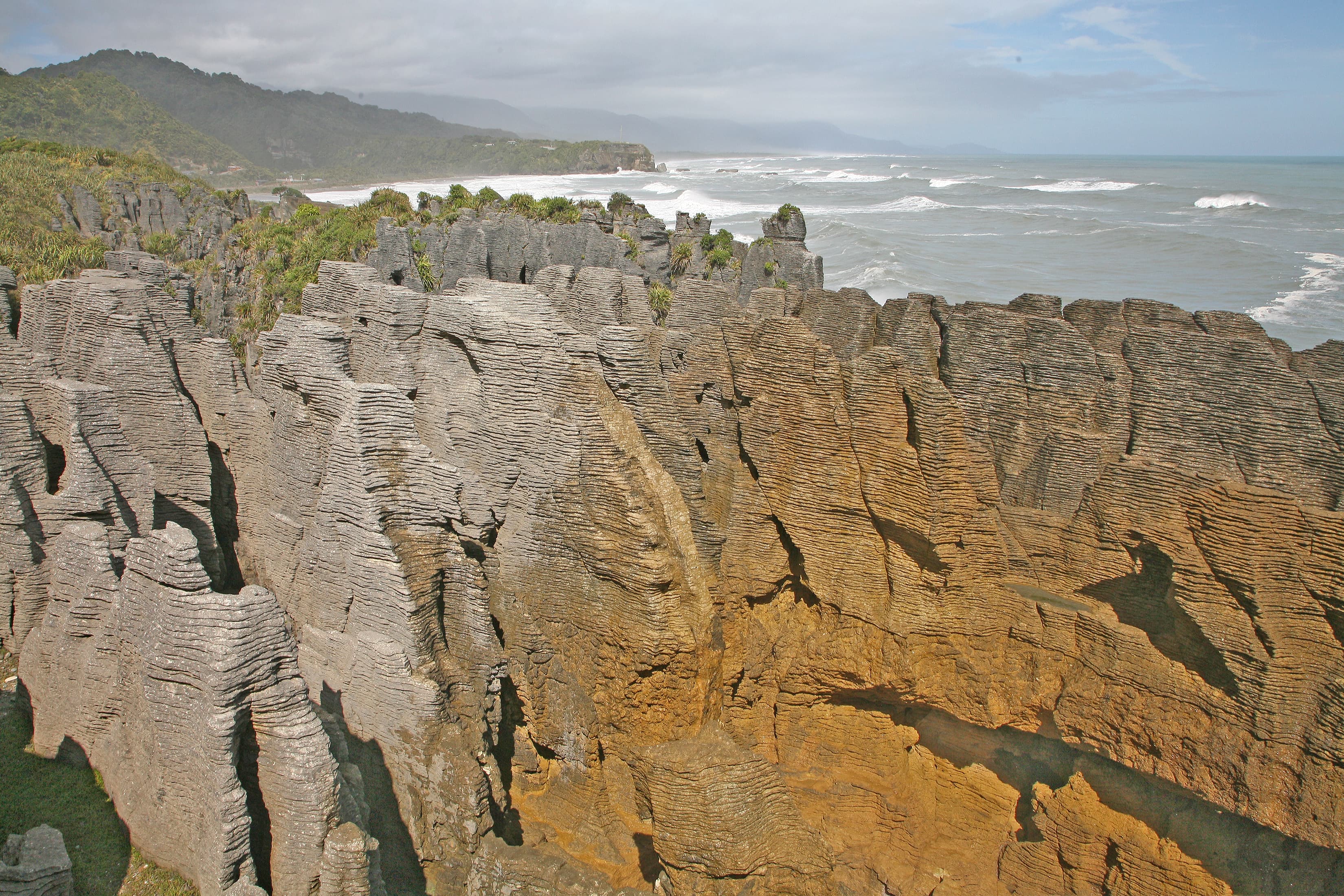
Punakaiki Pancake Rocks and Blowholes
Punakaiki Pancake Rocks and Blowholes — Natural landmark in West Coast, west-coast.
Natural Landmark · Rock Formation in West Coast
Photo: Wikimedia Commons (CC BY-SA)
 Written by Ben Cole· Updated Apr 2026
Find Nearby Accommodation
Hotels, apartments, hostels and luxury stays
We may earn a commission from bookings made through these links, at no extra cost to you.
About Punakaiki Pancake Rocks and Blowholes
Heavily eroded limestone formations that resemble stacks of pancakes, formed 30 million years ago on an ancient seabed. At high tide, seawater surges into caverns below the rocks and erupts through blowholes in spectacular plumes of spray. The short loop track through the formations is one of the West Coast's most popular walks.
Punakaiki, on New Zealand's West Coast, is home to one of the country's most distinctive geological features — a series of limestone formations so precisely layered they look remarkably like stacks of pancakes. Sitting right on State Highway 6, roughly 40 kilometres north of Greymouth, the site is easily accessible and free to enter, making it one of the more straightforward stops on any West Coast road trip.
The rocks themselves are ancient — formed around 30 million years ago when this stretch of coastline lay beneath the sea. Over time, uplift and relentless erosion by wind and water sculpted the limestone into its signature stratified appearance: horizontal bands of rock, stacked in columns, worn smooth at the edges. Alongside the formations, a network of underground caverns channels tidal surges upward through openings in the rock, producing the blowholes that send plumes of seawater shooting into the air on a rising tide.
What to See and Do
A short loop track winds through the formations and out along the cliff edge, taking most visitors between 30 minutes and an hour to complete. The path is well-maintained and largely accessible — both wheelchairs and prams can manage the majority of the route, though a few sections involve steps. The track delivers close-up views of the pancake formations as well as wide coastal vistas looking out over the Tasman Sea.
The blowholes are the undeniable highlight, but their drama depends heavily on timing. The water plumes are most impressive one to two hours either side of high tide, when the surges are strongest. At low tide, the blowholes may do very little. It's worth checking tide times before you arrive — this single piece of planning makes a significant difference to the experience. On days with strong swells, the spray can carry a considerable distance, so a waterproof jacket is genuinely useful rather than just precautionary.
Photography is rewarding throughout the site, though harsh midday sun can flatten the textures in the rock. A polarising filter helps cut glare on the water and bring out the layering in the limestone. Early morning and late afternoon light tends to work best.
History
The Pancake Rocks are Tertiary limestone, laid down on an ancient seabed approximately 30 million years ago. The material accumulated gradually over millennia as sediment and marine organisms settled on the ocean floor. After tectonic uplift brought the seabed to its current position, wind, rain, and wave action went to work on the rock — carving out the distinctive stratified columns visible today. The blowholes are a product of the same long erosion process, forming where sea caves and tunnels beneath the formations intersect with openings at the surface.
Getting There and Access
Punakaiki sits on State Highway 6, adjacent to the small village of the same name. It's around 40 kilometres north of Greymouth and approximately two hours south of Westport. There is no public transport to the site, so a vehicle is essential.
Free parking is available in the main carpark, which holds around 100 vehicles, with overflow options nearby. Accessible parking is available for visitors with mobility needs. Toilets are located at the visitor area, along with a café serving basic refreshments. There are also picnic areas near the carpark if you'd prefer to bring your own food.
Visitor Tips
- Check the tides before you go. This is the single most important piece of planning for this visit. Tide times are widely available online — aim to arrive one to two hours before high tide for the best blowhole activity.
- Arrive early or late. The site is one of the West Coast's most visited stops, and tour groups tend to arrive mid-morning. Getting there between 7–9am or returning in the late afternoon (4–6pm) usually means a noticeably quieter experience.
- Bring a waterproof layer. Spray from the blowholes travels, particularly when there's wind. It's an easy thing to forget on a fine day and an uncomfortable thing to regret.
- Watch your footing. The rocks and path surfaces can be uneven and become slippery when wet. Sturdy footwear is a practical choice over sandals or smooth-soled shoes.
- Shade is limited. On sunny days the site is largely exposed, so sun protection is worth considering.
Best Time to Visit
The site is open year-round, and the formations themselves are worth seeing in any season. Winter swells can actually produce more dramatic blowhole activity, though wet-weather days bring their own hazards on the rocks. Avoid visiting in heavy rain if possible, both for safety and for the general misery of standing on an exposed headland in a downpour. Whatever the season, tide timing matters far more than time of year.
Getting There
Located near Punakaiki village on the West Coast, roughly 40km north of Greymouth and 2 hours south of Westport. Access via State Highway 6. No public transport; a vehicle is essential.
Parking
Free parking available at the visitor area. Capacity around 100 vehicles in the main carpark with overflow options nearby. Accessible parking for people with mobility needs. Well-maintained facilities.
Visitor Tips
- •Visit at high tide for dramatic blowhole spray—check tide times before arriving
- •The loop track is short but popular; arrive early morning or late afternoon to avoid crowds
- •Bring a waterproof jacket; spray from blowholes can soak you, especially on windy days
- •Photography is excellent but challenging in bright sun—polarising filter recommended
- •Wear sturdy walking shoes; rocks are uneven and can be slippery when wet
Find Nearby Accommodation
Hotels, apartments, hostels and luxury stays
We may earn a commission from bookings made through these links, at no extra cost to you.
Quick Facts
At a Glance
The Place
- Significance
- National
Plan Your Visit
- Entry
- Free
- Duration
- 30 minutes - 1 hour
- Best Time
- Year-round destination, but avoid heavy rain for safety on the rocks. High tide timing is crucial—blowholes are most dramatic 1–2 hours either side of high tide. Visit early morning (7–9am) or late afternoon (4–6pm) to beat tour groups.
Location
- Region
- West Coast
- State
- West Coast
Good to Know
Highlights
Activities
Family & Visitor Info
- Ages
- All ages. The short loop is suitable for families with prams and wheelchairs, though some sections have steps.
- Shade/Cover
- Limited shade
- Pram Friendly
- Yes
Food & Drink
Cafe on-site with basic refreshments. Picnic areas available near the carpark.
Features
Facilities
Nearby
Campsites(5)
Trails(3)
Find Nearby Accommodation
Hotels, apartments, hostels and luxury stays
We may earn a commission from bookings made through these links, at no extra cost to you.