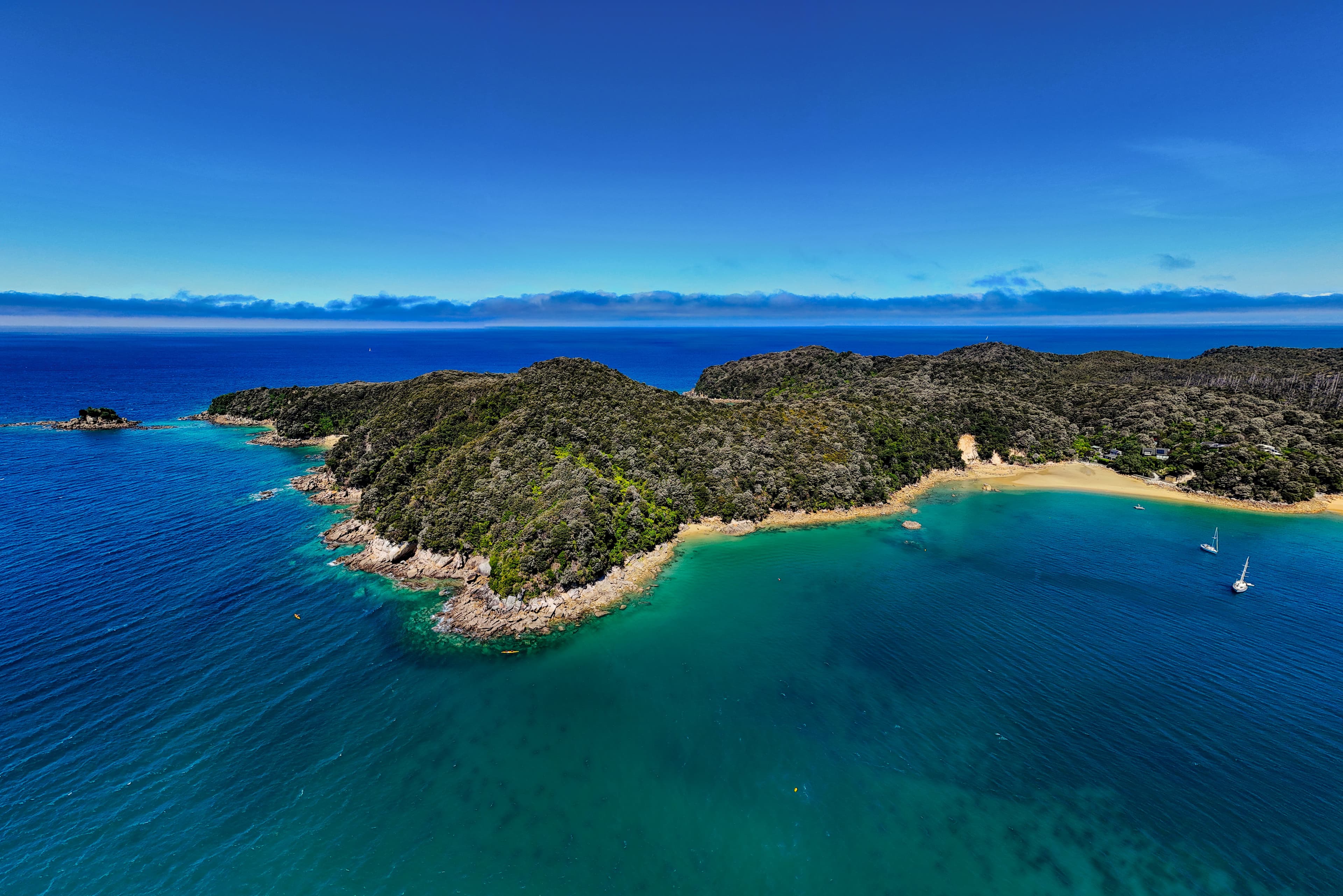
Abel Tasman National Park
Abel Tasman National Park — National park in Tasman, tasman.
National Park in Tasman
Photo: Wikimedia Commons (CC BY-SA)
 Written by Ben Cole· Updated May 2026
Find Nearby Accommodation
Hotels, apartments, hostels and luxury stays
We may earn a commission from bookings made through these links, at no extra cost to you.
About Abel Tasman National Park
New Zealand's smallest national park but one of its most popular. Abel Tasman features golden sand beaches, turquoise waters, lush native bush, and granite-fringed coastline. The Abel Tasman [Coast Track](/au/trails/nsw/coast-track) is one of New Zealand's Great Walks, running 60km along the coast.
Abel Tasman National Park sits at the top of New Zealand's South Island, where the Tasman and Golden Bay coastlines meet. Despite being the country's smallest national park at 237 km², it draws visitors in numbers that rival far larger reserves — and it's easy to understand why. Golden sand beaches backed by native bush, turquoise water, granite outcrops, and a coastline accessible by foot, kayak, or water taxi make it one of the most versatile parks in the country. Entry is free, and there's something here for everyone from day-trippers with young children to multi-day trampers.
What to See and Do
The centrepiece of the park is the Abel Tasman Coast Track, a 60-kilometre route that traces the coastline from Marahau in the south to Wainui in the north. It became one of New Zealand's official Great Walks in 1996 and remains among the most walked of the nine. The full track typically takes three to five days, passing through native forest, across tidal estuaries, and along stretches of beach that give way to granite headlands. Key stops along the route include Bark Bay, a sheltered beach with a DOC campsite, and access points to the Tonga Island Marine Reserve, where fur seals are a regular sighting.
You don't need to walk the whole track to see the park at its best. Water taxis depart from Marahau and Kaiteriteri beaches and drop passengers at various points along the coast, making it easy to walk a section and catch a taxi back — or to skip ahead if conditions aren't ideal. This flexibility is one reason the park suits such a wide range of visitors.
Sea kayaking is another popular way to experience the coastline. Guided tours depart daily, typically covering sections of the coast where you're likely to encounter fur seals and little blue penguins. Morning departures offer the best wildlife viewing conditions. A number of operators run guided day and multi-day kayaking trips; booking ahead is advisable, particularly in summer.
Split Apple Rock, a large granite boulder split cleanly in two and sitting just offshore near Kaiteriteri, is one of the park's most recognisable landmarks. It can be viewed from the water on a kayaking tour or water taxi trip.
Swimming is available at many of the park's beaches — the combination of sheltered bays and calm conditions makes them well suited to it — though currents can be strong in some areas. Swim at patrolled beaches where possible and check conditions before heading in.
History
The park was established in 1942 and named after Dutch explorer Abel Tasman, who anchored in the area in 1642 — making his one of the earliest European visits to New Zealand. The park's landscape also holds significant Māori heritage, and the area was settled long before European contact. Today the park protects diverse native forest and a coastline that remains largely intact. The elevation of the Coast Track to Great Walk status in 1996 significantly increased the park's profile as a tramping destination, and visitor numbers have grown steadily since.
Getting There and Access
The gateway town is Motueka, approximately 1.5 hours south of Nelson. Most visitors organise transport from Motueka or from the beach car parks at Marahau and Kaiteriteri.
There is no direct public transport to the park, so a rental car or shuttle service is the practical option. For the Coast Track, Marahau serves as the southern trailhead — the car park is free with around 80 spaces, but fills quickly in summer, often by 9am. Overflow parking is available nearby. The Totaranui car park at the northern trailhead is larger (around 200 spaces) and less congested. Kaiteriteri Beach also has a large free car park and is a common departure point for water taxis.
For multi-day trampers, shuttle services run between Motueka and Totaranui, and water taxis can be used to return from any point on the track.
Visitor Tips
- Book the Coast Track well in advance — three to six months ahead for December to February is recommended. Hut and campsite bookings fill quickly and are managed through DOC.
- Start early, particularly on popular sections of the track. Water taxi spots can also book out.
- Water taxis are genuinely useful even if you're walking the full track — they can get you across tidal crossings or cut time off sections that are muddy after rain.
- Pack sun protection and insect repellent. The track is well-maintained, but sturdy tramping boots are still worthwhile, especially after wet weather.
- Sea kayaking tours are best booked ahead; go early morning for the best chance of wildlife sightings.
- The park suits all ages with some planning. Day walks and beach access make it workable for families with young children; the full Coast Track is generally best for children aged eight and older.
Food and Supplies
There are no restaurants in the park itself. Basic café facilities and supplies are available at Marahau and Kaiteriteri. For multi-day walks, bring your own food — DOC campgrounds along the track have cooking facilities. Stocking up in Motueka before heading into the park is the sensible approach.
Best Time to Visit
October to April covers the main visitor season, with the warmest and driest conditions for swimming and kayaking. December to February is peak summer and the busiest period — expect crowds on the track and at the beaches. Shoulder months (October–November and March–April) offer reasonable weather with fewer people. The track can be walked year-round, though winter brings cooler temperatures and more rain.
More information, including Great Walk bookings, is available through the DOC website.
Getting There
Access via Motueka (1.5 hours south of Nelson) — the gateway town with visitor services. For the Coast Track: drive to Marahau car park (southern trailhead, 1 hour from Motueka) or catch a shuttle from Motueka to Totaranui (northern trailhead). Water taxis essential for most visitors — depart from Marahau and Kaiteriteri beaches. No public transport direct to park; rental car or shuttle services recommended.
Parking
Marahau car park (southern trailhead): free, ~80 spaces, can fill by 9am in summer — overflow available nearby. Totaranui car park (northern trailhead): free, ~200 spaces, less congested. Kaiteriteri Beach car park: free, large capacity. All have standard accessibility. Note: Many visitors use water taxis and don't leave vehicles parked long-term.
Visitor Tips
- •Book the Abel Tasman Coast Track well in advance (3-6 months for peak season Dec-Feb) — it's one of NZ's most popular Great Walks
- •Start early to avoid crowds on popular sections and secure water taxi spots
- •Water taxis run between trailheads; use these to shorten walks or skip muddy inland sections
- •Bring sun protection, insect repellent, and sturdy tramping boots — the track is well-maintained but can be muddy
- •Sea kayaking tours depart daily; book ahead and go early morning for best wildlife viewing (fur seals, little blue penguins)
- •Swim only at patrolled beaches and check conditions — currents can be strong
Find Nearby Accommodation
Hotels, apartments, hostels and luxury stays
We may earn a commission from bookings made through these links, at no extra cost to you.
Quick Facts
At a Glance
The Place
- Area
- 237.1 km²
- Established
- 1942
- Significance
- National
Plan Your Visit
- Entry
- Free
- Duration
- 1-5 days
- Best Time
- October to April
Location
- Region
- Tasman
- State
- Tasman
Good to Know
Highlights
Activities
Family & Visitor Info
- Ages
- All ages with planning — day walks and beaches suit families with young children; full Coast Track best for ages 8+
- Shade/Cover
- Moderate shade
- Pram Friendly
- No
Food & Drink
BYO essential for multi-day treks. Basic café/supplies at Marahau and Kaiteriteri. DOC campgrounds have cooking facilities.
Features
Facilities
Nearby
Campsites(5)
Trails(3)
Attractions(1)
Find Nearby Accommodation
Hotels, apartments, hostels and luxury stays
We may earn a commission from bookings made through these links, at no extra cost to you.