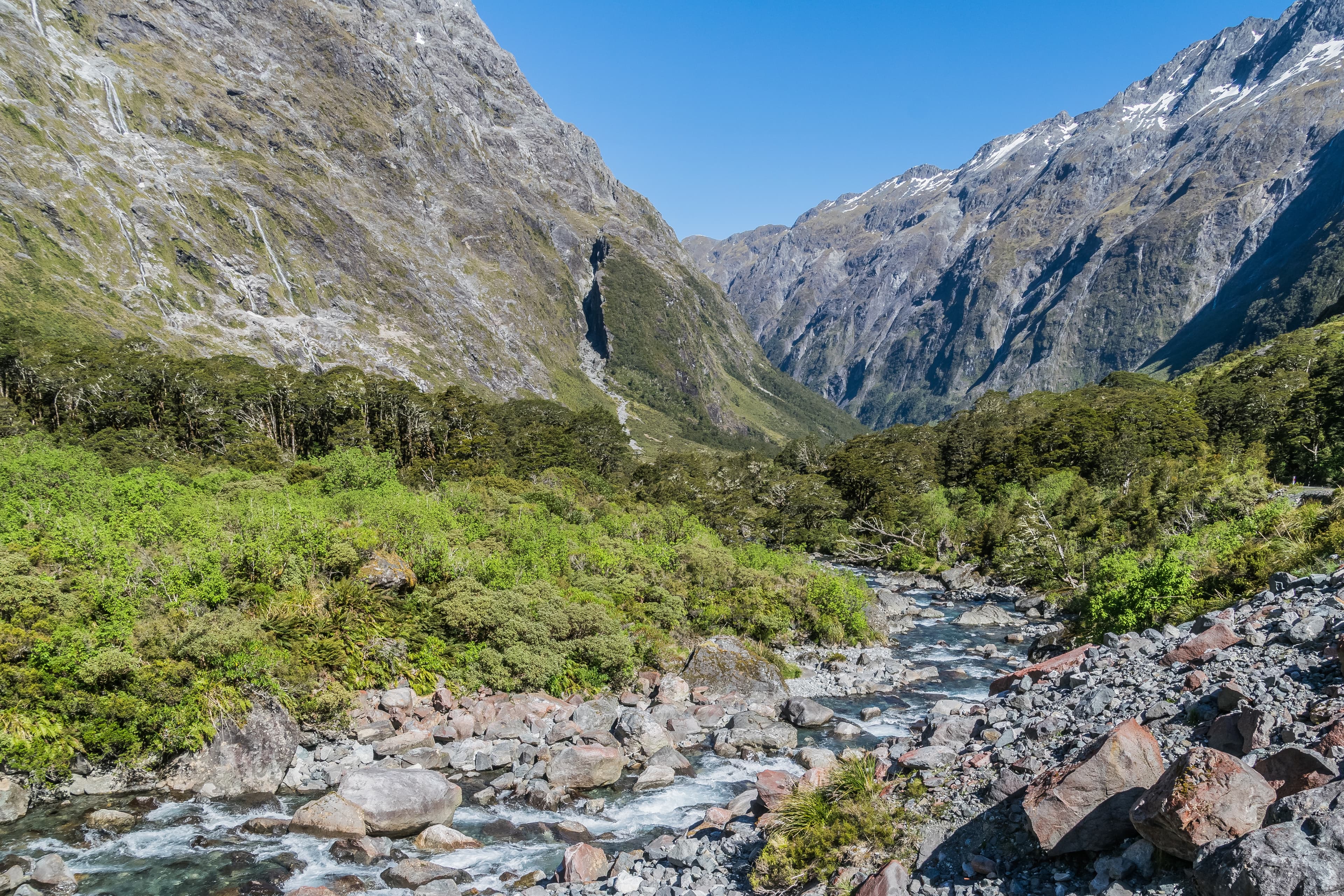
Fiordland National Park
Fiordland National Park — National park in Fiordland, southland.
National Park in Southland
Photo: Wikimedia Commons (CC BY-SA)
 Written by Ben Cole· Updated Apr 2026
Find Nearby Accommodation
Hotels, apartments, hostels and luxury stays
We may earn a commission from bookings made through these links, at no extra cost to you.
About Fiordland National Park
New Zealand's largest national park and part of the Te Wahipounamu World Heritage Area. Fiordland is a wilderness of towering peaks, deep fiords, ancient rainforest, and cascading waterfalls. Home to Milford Sound, Doubtful Sound, and three of New Zealand's eleven Great Walks: the Milford Track, Kepler Track, and Routeburn Track.
Fiordland National Park covers 1.26 million hectares of southwestern New Zealand, making it the country's largest national park. It forms the centrepiece of the Te Wahipounamu World Heritage Area — a vast sweep of wilderness that extends across much of the South Island's southwest. Known in Māori as Ata Whenua (shadowland), it encompasses a landscape shaped by millions of years of glacial and tectonic activity: deep fiords, ancient temperate rainforest, jagged peaks, and waterfalls that plunge hundreds of metres into dark, still water.
Entry to the park is free, and while its most famous landmarks — Milford Sound and Doubtful Sound — are well-trafficked, much of Fiordland remains genuinely remote and difficult to reach without significant preparation. This is not a place to visit lightly, but for those who come equipped, it offers experiences that are hard to find anywhere else in New Zealand.
What to See and Do
Milford Sound is the park's most visited destination and for good reason. The fiord stretches 15 kilometres inland from the Tasman Sea, flanked by sheer rock walls rising more than a kilometre above the waterline. Scenic cruises depart regularly throughout the day and remain the most accessible way to experience it, suitable for all ages and fitness levels. Kayaking tours are also available for those who want a more immersive time on the water.
Doubtful Sound is larger, quieter, and considerably more remote. Reaching it requires a boat crossing of Lake Manapouri, a bus over Wilmot Pass, and a second boat — making it a full-day commitment at minimum. Overnight cruises operate on the sound and offer a different perspective on the park's scale and solitude.
Sutherland Falls, one of New Zealand's tallest waterfalls, is accessible only via the Milford Track — a reminder that many of Fiordland's highlights reward those willing to walk.
For trampers, Fiordland hosts three of New Zealand's eleven Great Walks:
- Milford Track (4 days) — runs 53 kilometres from the head of Lake Te Anau to Sandfly Point near Milford Sound via the MacKinnon Pass. Suitable for ages 12 and over with regular hiking experience.
- Kepler Track (2–3 days) — a loop beginning and ending near Te Anau, covering alpine ridgelines and beech forest. Suitable for ages 10 and over.
- Routeburn Track (3 days) — crosses between Fiordland and Mount Aspiring National Parks. Due to exposed alpine terrain, it's best suited to ages 14 and over with mountain experience.
Beyond the Great Walks, the park also supports diving, fishing, and photography across its many access points. DOC-operated campgrounds are available throughout the park.
History
Fiordland's fiords were carved by glaciers over thousands of years, and the landscape has changed little since the first Māori travellers — and later European explorers — encountered it in the 19th century. The Milford Track was developed in the 1880s as a practical route to Milford Sound and has since become one of New Zealand's most iconic tramping trails.
The national park was formally established in 1952 and later incorporated into the Te Wahipounamu World Heritage Area, which recognises the outstanding natural values of Fiordland, Aoraki/Mount Cook, Westland Tai Poutini, and Mount Aspiring national parks combined.
Getting There and Access
Te Anau is the main gateway town and the most practical base for visiting the park. It sits roughly two hours from Milford Sound via State Highway 94 — a scenic but narrow and winding road that is not suitable for large campervans. Te Anau has a Fiordland i-SITE visitor centre, supermarkets, accommodation, cafes, and restaurants; stock up on supplies here before heading into the park.
From Queenstown, allow around 2 hours to reach Te Anau or 4 to 4.5 hours to reach Milford Sound. From Invercargill, it's approximately 3 hours.
InterCity and Tracknet run bus services to Te Anau and some trailheads, though services are limited and schedules vary by season.
Parking at Milford Sound is limited to around 300 spaces and fills by 11am in summer. Arriving early is strongly advisable. Overflow parking is available at The Divide (also the Routeburn Track trailhead), though there are no facilities there. Te Anau village and the i-SITE have large free carparks suitable for coaches. DOC campgrounds near Te Anau offer campervan parking with hookups for a small additional fee. Accessible parking is available at most facilities.
Visitor Tips
- Book Great Walks well in advance. During peak season (December to February), hut and campsite bookings fill months out. The DOC website handles all Great Walk bookings.
- Sandflies are a genuine nuisance — particularly near water at dawn and dusk. Insect repellent and long-sleeved clothing are essential, not optional.
- Weather changes without much warning. Even in summer, pack a waterproof jacket and extra layers. Conditions on exposed alpine sections can deteriorate quickly.
- Milford Sound day cruises book out fast. Secure your cruise ahead of time, or arrive very early if booking on the day.
- Start long hikes early to maximise daylight and allow time for a safe descent before dark.
- The foreshore paths at Milford Sound are suitable for prams. Beyond that, the terrain requires appropriate footwear and fitness.
Best Time to Visit
October to April is the main hiking season, when tracks are generally accessible and daylight hours are longest. December to February is peak season — busy, but also the most reliable weather window. Scenic cruises run year-round, and Milford Sound and Doubtful Sound can be visited in any season, with waterfalls often running most dramatically after rain in the cooler months.
Nearby Attractions
Te Anau itself is worth a day — it sits on the shore of Lake Te Anau, New Zealand's second-largest lake, and the township has a good range of services and tours. Lake Manapouri, 20 kilometres south of Te Anau, serves as the departure point for Doubtful Sound excursions. For those travelling through from Queenstown, the Routeburn Track trailhead at The Divide sits within reach as a day walk option, even for those not undertaking the full route.
The DOC website at doc.govt.nz has current track conditions, hut availability, and booking information for all Great Walks.
Warnings
Getting There
Access via Te Anau (main gateway, 2 hours to Milford Sound), Queenstown (3.5 hours), or Invercargill (3 hours). State Highway 94 to Milford Sound is scenic but narrow and winding—not suitable for large campervans; alternative carpark at The Divide for Routeburn Track. Public transport: InterCity and Tracknet services available but limited.
Parking
Te Anau village and Fiordland i-SITE have large free carparks (100+ spaces, coach accessible). Milford Sound carpark is smaller (300 spaces, fills by 11 am in summer); overflow parking at The Divide (Routeburn trailhead) available but no facilities. Most facilities have accessible parking. Department of Conservation campgrounds near Te Anau provide campervan parking with hookups (small additional fee).
Visitor Tips
- •Book Great Walks (Milford, Kepler, Routeburn) months ahead during peak season (December-February)
- •Sandflies are relentless—bring insect repellent and wear long sleeves, especially near water at dawn/dusk
- •Weather changes rapidly; pack waterproof jacket and extra layers even in summer
- •Milford Sound day cruises fill quickly; book ahead or arrive very early
- •Start long hikes early to maximise daylight and allow safe descent before dark
Find Nearby Accommodation
Hotels, apartments, hostels and luxury stays
We may earn a commission from bookings made through these links, at no extra cost to you.
Quick Facts
At a Glance
The Place
- Area
- 12607 km²
- Established
- 1952
- Significance
- National
Plan Your Visit
- Entry
- Free
- Duration
- 2-5 days
- Best Time
- October to April for hiking, year-round for cruises
Location
- Region
- Fiordland
- State
- Southland
Good to Know
Highlights
Activities
Family & Visitor Info
- Ages
- All ages for scenic cruises and short walks; families with prams suited to Milford Sound foreshore paths only. Great Walks require moderate to advanced fitness: Kepler Track (2–3 days) best for ages 10+; Milford Track (4 days) ages 12+ with regular hiking experience; Routeburn (3 days) ages 14+ with mountain experience.
- Shade/Cover
- Limited shade
- Pram Friendly
- No
Food & Drink
Te Anau village has supermarkets, cafes, and restaurants. Milford Sound has one cafe (limited options, expensive). All Great Walk huts provide communal cooking facilities; some supply meals. Bring own supplies for tramping; grocery shopping essential in Te Anau before departure.
Features
Facilities
Nearby
Campsites(5)
Trails(3)
Attractions(1)
Find Nearby Accommodation
Hotels, apartments, hostels and luxury stays
We may earn a commission from bookings made through these links, at no extra cost to you.