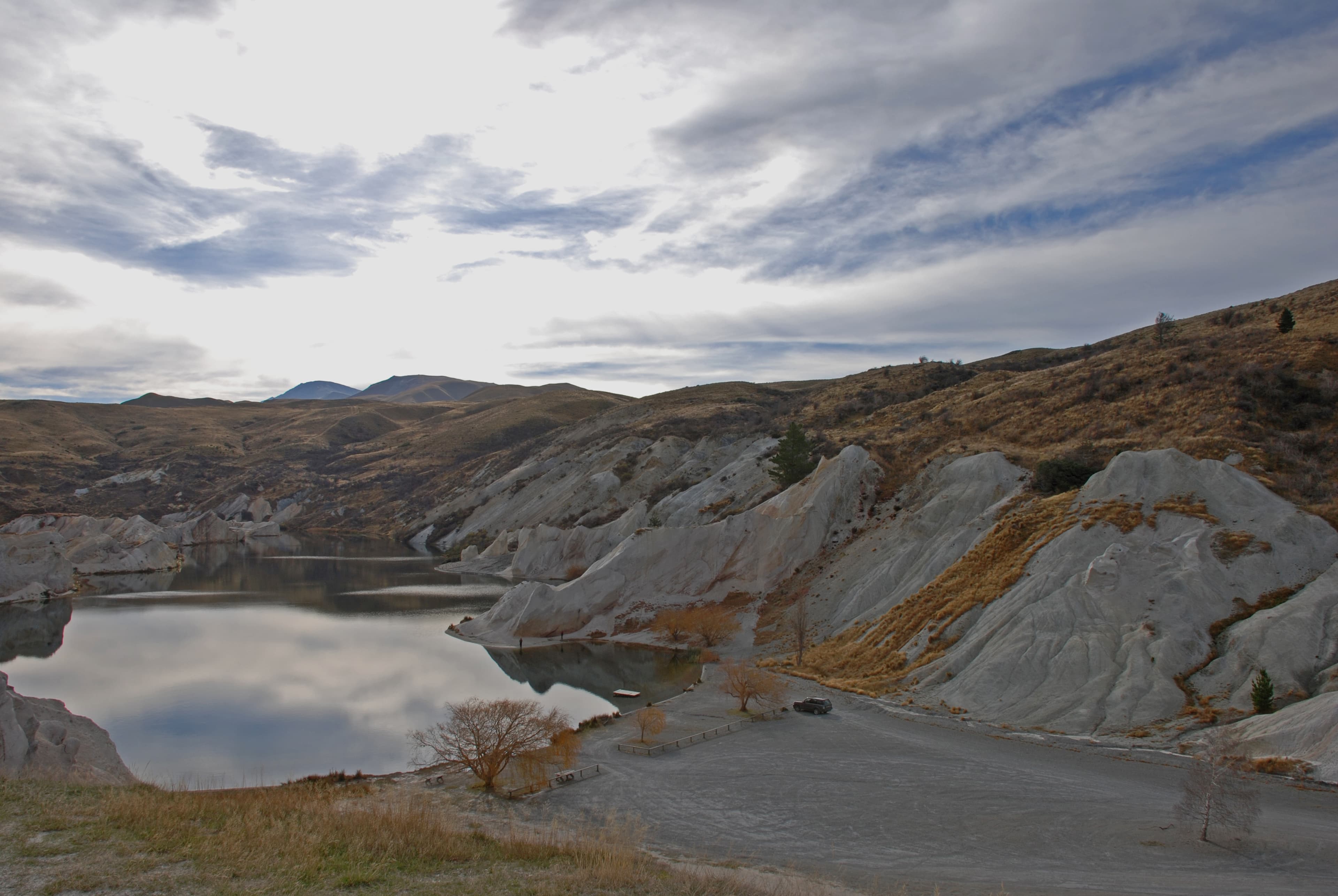
Otago Goldfields Heritage Area
Otago Goldfields Heritage Area — Historic site in Central Otago, otago.
Historic Site · Ruins in Otago
Photo: Wikimedia Commons (CC BY-SA)
 Written by Ben Cole· Updated Apr 2026
Find Nearby Accommodation
Hotels, apartments, hostels and luxury stays
We may earn a commission from bookings made through these links, at no extra cost to you.
About Otago Goldfields Heritage Area
The remains of New Zealand's gold rush, which began in 1861 at Gabriel's Gully and spread across the dramatic Central Otago landscape. Historic sites include Chinese miners' settlements at Arrowtown, the Kawarau Gorge mining centre, Bendigo and Cromwell mining areas, and restored heritage buildings. The area tells the story of Chinese and European miners who transformed the region.
The Otago Goldfields Heritage Area spans a wide swathe of Central Otago, preserving the physical remnants of New Zealand's most significant gold rush. Beginning in 1861, the Otago goldfields drew thousands of prospectors — European and Chinese alike — into a rugged landscape of gorges, schist rock, and river terraces. What they left behind is now protected under Heritage New Zealand Pouhere Taonga and the Department of Conservation, scattered across dozens of kilometres of some of the country's most striking inland terrain.
The heritage area isn't a single destination but a collection of sites connected by the same story. Plan to spend at least half a day visiting two or three locations, or a full day if you want to cover the major highlights on foot.
History
The gold rush began in earnest in 1862, and within a few years the Otago goldfields had drawn the largest influx of migrants New Zealand had seen. Among them were thousands of Chinese miners, many from the Guangdong province of southern China, who arrived to work claims that European miners had largely abandoned. They faced considerable discrimination — restrictive laws, social exclusion, and at times outright hostility — yet managed to establish tightly knit communities and make substantial contributions to the region's mining output.
By the mid-1860s the rush was at its peak. It declined steadily through the following decades, and by the early 1900s most of the goldfields had been abandoned. What remained were stone cottages, sluicing equipment, graves, and the outlines of settlements gradually being reclaimed by tussock and thyme. These remnants now document a multicultural chapter of New Zealand's colonial history that is only beginning to receive the attention it deserves.
What to See and Do
The four key sites within the heritage area each offer a different angle on the goldfields story.
Arrowtown Chinese Settlement is the most accessible and well-interpreted site, and the best place to start your visit. Located on the edge of Arrowtown township, the settlement preserves the stone and mud-brick ruins of dwellings, a bakery, and a general store used by Chinese miners during the rush years. Interpretive signage throughout explains the social history and daily life of the community. The setting along Bush Creek is evocative, particularly in autumn when the deciduous trees planted by early settlers turn golden and amber — Arrowtown's autumn foliage draws visitors in its own right between March and May.
Bendigo Historic Reserve, situated near Cromwell, protects the remains of one of the goldfields' most productive mining areas. The reserve contains stone cottage ruins, old shafts, and dry-stone walls spread across an open, windswept hillside. It's quieter and less developed than Arrowtown, which makes for a more contemplative experience. The terrain here is uneven and exposed, so sturdy footwear is important.
Kawarau Gorge follows the Kawarau River along State Highway 6 between Queenstown and Cromwell. The gorge itself served as a major route into the goldfields, and evidence of mining activity — races, tailings, and rock cuttings — can be seen along its length. The dramatic landscape of the gorge is worth taking time to explore.
Cromwell Heritage Precinct preserves a cluster of historic buildings in the centre of Cromwell, relocated and restored when Lake Dunstan was created following the construction of the Clyde Dam. The precinct includes gold-rush era stone buildings and provides context for the broader history of the region.
Across multiple sites, you can try your hand at gold panning — check locally in Arrowtown or Cromwell for current access and any equipment hire options. The activity suits families and gives a practical sense of the patience required to work a goldfield claim. Guided tours are available at certain sites if you want more depth than the interpretive signage provides.
Getting There and Access
A hire car is essential — there is no public transport to the individual heritage sites. Arrowtown is 21 kilometres from Queenstown via SH6 and makes a natural base for exploring the area. From Arrowtown, Cromwell and the Bendigo Historic Reserve are roughly 45 kilometres east of Queenstown via SH6.
Free parking is available at all four main sites. Most areas have toilets on site. Note that accessibility varies considerably — the Arrowtown Chinese Settlement is the most visitor-friendly, while Bendigo and parts of the Kawarau Gorge require walking on uneven, sometimes muddy ground.
Dogs are welcome across the heritage area but must be kept on a lead near historic structures.
Visitor Tips
- Start at the Arrowtown Chinese Settlement; it has the most developed interpretive infrastructure and sets up the history well for the other sites
- Wear sturdy, closed-toe shoes — the terrain at Bendigo and parts of the Kawarau Gorge is rough
- Bring your own food and water; there are no cafes at the heritage sites themselves, though Arrowtown and Cromwell both have a good range of cafés and restaurants nearby
- Picnic areas are available at the main sites if you want to make a day of it
- Allow three to four hours minimum for two or three sites; a full day if you plan to hike between locations or explore thoroughly
Best Time to Visit
April through October offers cooler temperatures and generally fewer visitors. The Arrowtown area is particularly worth visiting in autumn — March through May — when the town's famous deciduous trees are at their most colourful, framing the Chinese Settlement ruins in warm tones. Winter brings snow to the higher elevations around Bendigo, which can be atmospheric but also makes access more difficult. Weekday mornings are the quietest time across all sites and are ideal for photography given the low, directional light.
Getting There
Central Otago region; Arrowtown is 21 km from Queenstown via SH6. Bendigo Historic Reserve near Cromwell (45 km east of Queenstown). Kawarau Gorge accessible from SH6 between Queenstown and Arrowtown. No public transport to individual sites; hire car essential.
Parking
Free parking at main sites including Arrowtown Chinese Settlement, Bendigo Historic Reserve, and Cromwell Heritage Precinct. Generally ample parking; no capacity constraints noted. Accessibility varies by site—some areas require walking on uneven terrain. Small overflow areas at popular locations.
Visitor Tips
- •Visit Arrowtown Chinese Settlement first—it's the most developed site with interpretive signage
- •Bring sturdy walking shoes; terrain is uneven and can be muddy after rain
- •Gold panning opportunities available at several sites; check locally for current access
- •Dogs welcome but keep on lead near historic structures
- •Allow 3-4 hours minimum to see multiple sites; full day recommended for hiking between locations
Find Nearby Accommodation
Hotels, apartments, hostels and luxury stays
We may earn a commission from bookings made through these links, at no extra cost to you.
Quick Facts
At a Glance
The Place
- Significance
- National
Plan Your Visit
- Entry
- Free
- Duration
- Half to full day
- Best Time
- April to October for cooler weather and fewer crowds. Autumn (March–May) offers striking colours around Arrowtown. Winter can bring snow to higher elevations. Weekdays quieter than weekends. Early morning best for photography.
Location
- Region
- Central Otago
- State
- Otago
Good to Know
Highlights
Activities
Family & Visitor Info
- Ages
- All ages; best for ages 6+ who can walk uneven terrain and appreciate history
- Shade/Cover
- Limited shade
- Pram Friendly
- No
Food & Drink
No cafes at heritage sites themselves; BYO food and water recommended. Cafes and restaurants available in nearby Arrowtown and Cromwell towns.
Features
Facilities
Nearby
Campsites(5)
Trails(3)
Attractions(1)
Find Nearby Accommodation
Hotels, apartments, hostels and luxury stays
We may earn a commission from bookings made through these links, at no extra cost to you.