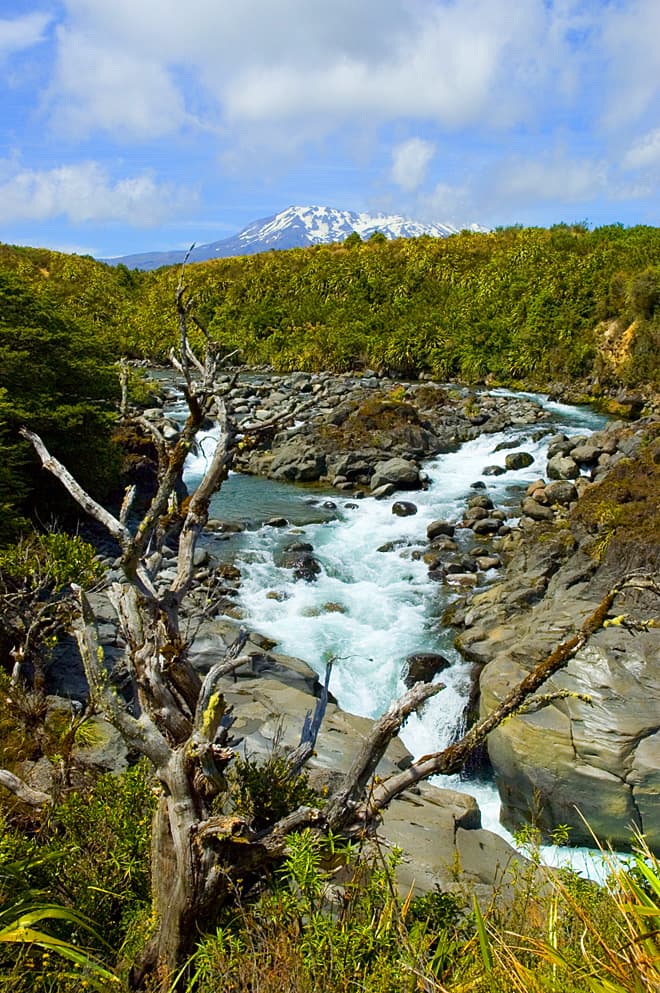
Tongariro National Park
Tongariro National Park — National park in Central Plateau, manawatu-whanganui.
National Park in Manawatū-Whanganui
Photo: Wikimedia Commons (CC-BY-SA)
 Written by Claire Ashworth· Updated Apr 2026
Find Nearby Accommodation
Hotels, apartments, hostels and luxury stays
We may earn a commission from bookings made through these links, at no extra cost to you.
World Heritage Status
- Status
- UNESCO World Heritage Site
- Year Listed
- 1990
- Criteria
- Cultural (criterion vi, added 1993) and Natural (criteria vii, viii, inscribed 1990)
- Management
- Department of Conservation
- Conservation
- UNESCO World Heritage Site — dual cultural and natural
About Tongariro National Park
New Zealand's oldest national park and a dual UNESCO World Heritage Site, Tongariro features three active volcanoes — Tongariro, Ngāuruhoe, and Ruapehu. Sacred to the Ngāti Tūwharetoa people, it was the first national park in the world to be gifted by indigenous people. Home to the famous Tongariro Alpine Crossing day hike and the Tongariro Northern Circuit, one of New Zealand's Great Walks.
Tongariro National Park sits at the heart of New Zealand's North Island, covering nearly 800 square kilometres of volcanic plateau, ancient lava fields, steaming craters, and alpine terrain. It is New Zealand's oldest national park and carries a distinction no other park in the world can claim: it was the first to be established following a gift of sacred land by indigenous people. That history, combined with its dramatic landscape and dual UNESCO World Heritage listing, makes Tongariro one of the most significant natural and cultural sites in the country.
The park's Māori name, Te Papa-kura-o-Tongariro, reflects its enduring spiritual importance to the Ngāti Tūwharetoa people, whose ancestral connection to this land predates European settlement by centuries.
History
In 1887, Ngāti Tūwharetoa paramount chief Te Heuheu Tūkino IV gifted the summits of the three central volcanoes — Tongariro, Ngauruhoe, and Ruapehu — to the people of New Zealand. The gesture was both protective and visionary: by placing the land under Crown guardianship as a national park, Te Heuheu sought to prevent the sacred mountains from being surveyed, sold, or divided. The result was the world's first national park created through an indigenous land gift, and only the fourth national park established anywhere in the world at the time.
The park received UNESCO World Heritage listing in 1990, initially for its natural values — the volcanic geology, unique landforms, and outstanding scenery. In 1993, it became the first site in the world to be inscribed as a cultural landscape, with the addition of cultural heritage criteria recognising the mountains' profound significance to Māori. The park is managed by the Department of Conservation.
What to See and Do
Three active volcanoes define the park's character. Mount Ruapehu, at 2,797 metres, is the highest point in the North Island and supports a ski area on its upper slopes. Mount Ngauruhoe, the youngest and most consistently active of the three, is an almost perfectly conical stratovolcano rising to 2,291 metres. Mount Tongariro is a complex volcanic massif whose craters and crater lakes form the centrepiece of the park's most famous walk.
The Tongariro Alpine Crossing is a 19.4-kilometre one-way traverse across the volcanic terrain of Mount Tongariro. Classified as one of New Zealand's Great Walks, it takes most walkers between six and seven hours to complete and passes through South Crater, across the Red Crater rim, and down past the vivid Emerald Lakes — mineral-coloured crater lakes whose striking hues come from geothermal activity. The crossing requires good fitness and is best suited to those aged ten and over with some hiking experience.
The Tama Lakes are a less visited but rewarding alternative for walkers looking for a full-day outing without the crowds of the Alpine Crossing. The track climbs from Whakapapa Village through tussock and volcanic terrain to two crater lakes perched above the plateau.
Beyond hiking, the park offers skiing and snowboarding at Whakapapa Ski Area on Mount Ruapehu during the winter season (June to October), as well as mountaineering on Ruapehu and Ngauruhoe for experienced and well-equipped climbers. The park's altitude and lack of light pollution also make it well suited to stargazing on clear nights.
Guided walks and tours are available through various operators, which is particularly worthwhile for first-time visitors to the Alpine Crossing or for those wanting to understand the cultural and geological context of the landscape.
Getting There and Access
The main gateway into the park is Whakapapa Village, accessed via State Highway 48, which branches off State Highway 4. The nearest major towns are Taupō, approximately 90 kilometres to the north, and Ohakune, around 50 kilometres to the south.
Public transport options are limited. Having your own vehicle is the most straightforward way to reach the park, but regular shuttle services operate from Taupō and surrounding towns, particularly for the Tongariro Alpine Crossing — which is a one-way track, making a shuttle or car shuffle a practical necessity for most walkers.
Free parking is available at Whakapapa Village and at several trailhead carparks throughout the park. During school holidays and busy summer weekends, carparks can fill early; arriving before 7am or using a shuttle service avoids the worst of it.
Entry to the park is free.
Best Time to Visit
The park is a year-round destination, but the experience changes significantly by season.
November to April is the prime period for hiking. The Tongariro Alpine Crossing is most accessible during these warmer months, though even in summer, snow and ice can be present at altitude. Conditions change rapidly at elevation.
June to October sees the park shift into ski season, with Whakapapa Ski Area operating on Mount Ruapehu when snow conditions allow.
Visitor Tips
- Book the Tongariro Alpine Crossing in advance if you're visiting between December and February — it is one of the most popular day walks in the country and numbers are managed during peak season.
- Start early. Afternoon weather deterioration is common across the volcanic plateau, and an early start also helps you avoid the busiest sections of the track.
- Check volcanic activity alerts and weather forecasts before any high-altitude walk. All three volcanoes are active, and conditions can shift quickly.
- Carry at least two to three litres of water per person for a full day on the Alpine Crossing. There is no reliable water source on the track, and UV exposure at altitude is significant even on overcast days.
- Pack warm layers regardless of the season. The elevation and exposed terrain mean temperatures can drop sharply.
- The DOC Visitor Centre at Whakapapa Village is the best first stop for current track conditions, maps, and safety information.
- A café operates at Whakapapa Village, and picnic areas are available at major trailheads. For full-day walks, bring your own food and snacks — there are no facilities on the track itself.
- Shade is limited across most of the park's walking terrain, so sunscreen and a hat are essential.
Camping is available within the park; facilities including toilets and parking are in place at key access points. For families with young children, shorter walks around the Whakapapa Village area are more suitable than the Alpine Crossing or summit tracks.
Warnings
Getting There
Main access via Whakapapa Village (State Highway 4), 5km from the park boundary; nearest major town is Taupo (90km north) or Ohakune (50km south). Regular shuttle services operate from Taupo and nearby towns for the Alpine Crossing. Public transport limited; having a vehicle or booking a shuttle is practical
Parking
Free parking at Whakapapa Village and multiple trailhead carparks (Tama Lakes, Emerald Lakes access points). Parking can reach capacity during school holidays and weekends; arrive early or consider shuttle services. Limited accessibility parking at main facilities. Overflow parking available at alternative trailheads within the park
Visitor Tips
- •Book the Tongariro Alpine Crossing walk in advance during peak season (December-February); it's a full-day (6-7 hours) one-way trek requiring good fitness
- •Start early to avoid afternoon weather deterioration and crowds
- •Check volcanic activity and weather forecasts before attempting high-altitude walks — conditions change rapidly
- •Bring plenty of water (2-3 litres), sunscreen, and warm layers even in summer — altitude exposure is intense
- •Visit the DOC Visitor Centre at Whakapapa Village for track updates, maps, and safety information
Conservation & Management
UNESCO World Heritage Site — dual cultural and natural
Management
Department of Conservation
Find Nearby Accommodation
Hotels, apartments, hostels and luxury stays
We may earn a commission from bookings made through these links, at no extra cost to you.
Quick Facts
At a Glance
The Place
- Height
- 2797m
- Area
- 795.96 km²
- Established
- 1894
- UNESCO
- World Heritage Site
- Significance
- World Heritage
Plan Your Visit
- Entry
- Free
- Duration
- 1-3 days
- Best Time
- November to April for hiking, June to October for skiing
Location
- Region
- Central Plateau
- State
- Manawatū-Whanganui
Good to Know
Highlights
Activities
Family & Visitor Info
- Ages
- Varies by activity — family-friendly shorter walks for young children; Tongariro Alpine Crossing best for ages 10+ with good fitness; mountaineering (Ruapehu/Ngauruhoe) for experienced adults and teens
- Shade/Cover
- Limited shade
- Pram Friendly
- No
Food & Drink
Café at Whakapapa Village; picnic areas at major trailheads. BYO strongly recommended for full-day walks like the Alpine Crossing
Features
Facilities
Nearby
Campsites(5)
Whakapapa Holiday Park
Campsite · 10km
Whakapapa Holiday Park
Campsite · 10km
Waihohonu Campsite
Campsite · 13.6km
Whaihohonu campsite
Campsite · 13.6km
Mangahuia Camping Ground
Campsite · 14.5km
Trails(3)
Attractions(1)
Find Nearby Accommodation
Hotels, apartments, hostels and luxury stays
We may earn a commission from bookings made through these links, at no extra cost to you.