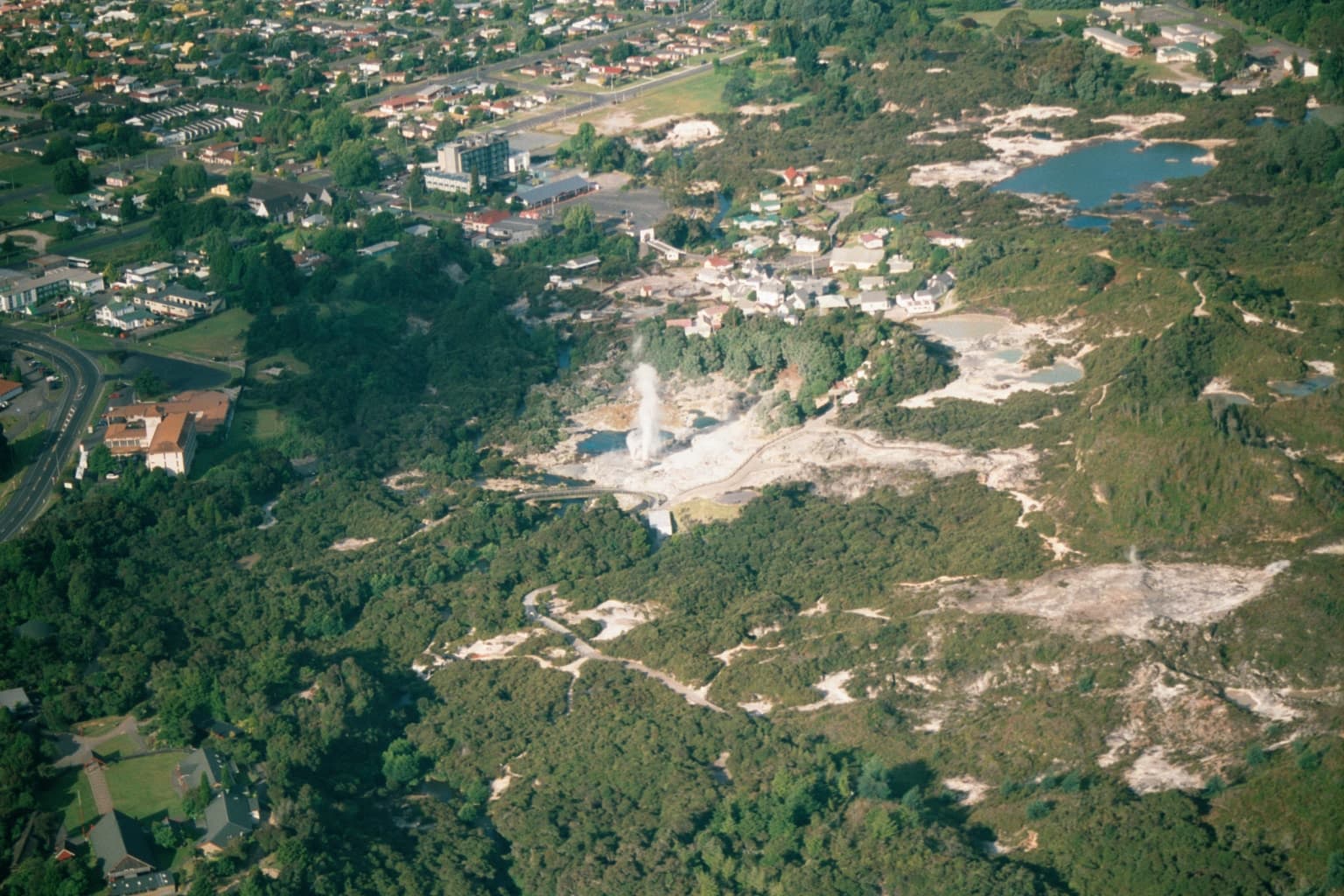
Te Puia (Whakarewarewa Geothermal Valley)
Whakarewarewa
Te Puia (Whakarewarewa Geothermal Valley) — Natural landmark in Rotorua, bay-of-plenty.
Natural Landmark · Spring in Bay of Plenty
Photo: Wikimedia Commons (CC BY-SA)
 Written by Ben Cole· Updated Apr 2026
Find Nearby Accommodation
Hotels, apartments, hostels and luxury stays
We may earn a commission from bookings made through these links, at no extra cost to you.
About Te Puia (Whakarewarewa Geothermal Valley)
Te Puia is home to Pohutu Geyser, the largest active geyser in the Southern Hemisphere, erupting up to 30 metres high. The site combines world-class geothermal features with the New Zealand Maori Arts and Crafts Institute, where master carvers and weavers practise and teach traditional arts. A deeply cultural experience combining nature and Maori heritage.
Te Puia — known by its traditional name, Whakarewarewa — sits just 2.5 kilometres south of Rotorua's city centre and offers something genuinely rare: a living geothermal landscape woven together with active Māori cultural practice. This is not simply a place to observe natural phenomena from a distance. You'll find master carvers shaping wood in the same tradition their tūpuna (ancestors) followed, weavers working with flax, and beneath it all, a valley that has been central to Māori life for centuries.
The site is managed by the New Zealand Māori Arts and Crafts Institute, which has operated here since 1963. That dual identity — geothermal wonder and cultural institution — is what makes Te Puia worth the time it asks of you.
What to See and Do
The centrepiece of Te Puia is Pohutu Geyser, the largest active geyser in the Southern Hemisphere. It erupts to heights of up to 30 metres and is most reliably active in the morning hours. You'll also find mud pools bubbling throughout the valley floor — a constant reminder that this landscape is very much alive.
Beyond the geothermal features, the New Zealand Māori Arts and Crafts Institute provides a genuine window into traditional Māori arts. Carvers working in the on-site school learn and practise whakairo (carving) under master craftspeople, and weavers demonstrate raranga (weaving) techniques. These aren't static displays — you're watching a living tradition being taught and maintained.
A kiwi house on-site provides the opportunity to see New Zealand's iconic flightless bird in a controlled environment. Māori cultural performances are also held on-site, though performance times vary — check at the visitor centre when you arrive.
With guided walks, guided tours, and the option to explore independently, Te Puia works well for most visitor styles. The site is wheelchair accessible and pram friendly, and lockers are available if you want to leave bags while you walk.
History
Whakarewarewa has been used by Māori for centuries. The geothermal features that make the valley so visually striking also made it deeply practical — the naturally heated ground and boiling pools were used for cooking and warmth long before European arrival.
The Pohutu Geyser has not always been as active as it is today. For a significant period it was largely dormant, but the 1886 eruption of Mount Tarawera — one of New Zealand's most destructive volcanic events — reactivated Pohutu and many of the surrounding geothermal features. The landscape you're walking through is, in a meaningful sense, shaped by that catastrophe.
The New Zealand Māori Arts and Crafts Institute was established in 1963 in response to concerns that traditional carving and weaving knowledge was at risk of being lost. Its presence at Whakarewarewa means the site continues to serve a living community purpose, not merely a heritage one.
Getting There and Access
Te Puia is straightforward to reach from Rotorua. Head south on Hemo Road (State Highway 5) — the site is clearly signposted and around 2.5 kilometres from the city centre. Free on-site parking is available, with accessible spaces near the visitor centre entrance and overflow parking nearby if the main carpark is full.
There is no direct public transport to the site, though some Rotorua accommodation providers offer a free shuttle service — worth checking when you book your stay.
Entry fees are $70 for adults and $35 for children.
Visitor Tips
- Arrive before 10am. Pohutu Geyser is most active in the morning, and early arrival also means smaller crowds, particularly on weekends and during school holidays.
- Wear enclosed shoes. The paths near geothermal features cover ground that is genuinely hot in places. Stay on marked paths at all times — this is both a safety requirement and a courtesy to the cultural site.
- Bring a light jacket. Geothermal steam can make the valley feel cooler than the surrounding area, even on warm days.
- Young children need close supervision near geothermal features. The site is family-friendly in terms of access, but the hazards are real.
- Allow 2–3 hours minimum. That gives you time for geyser viewing, the carving school, a cultural performance, and the kiwi house without rushing.
- Check performance times at the visitor centre when you arrive — they vary day to day.
- Photography is excellent throughout the site, but watch your footing near thermal pools.
Facilities
A café on-site serves light meals, snacks, and beverages. BYO food is welcome and practical if you plan a longer visit. A gift shop and visitor centre are also on-site, along with toilets and lockers.
Best Time to Visit
Te Puia operates daily from 8:00am to 5:00pm, year-round. Arriving between 8am and 10am gives you the best chance of witnessing Pohutu Geyser in full eruption. The site operates through winter (June–August), though you can expect cooler, wetter conditions during those months. Weekdays outside school holidays will generally be quieter than weekends or peak summer periods.
Warnings
Getting There
Located in Rotorua, 2.5 km south of Rotorua city centre. Follow Hemo Road (SH5) south from Rotorua — clearly signposted. Free shuttle available from some Rotorua accommodation. No public transport directly to the site.
Parking
Free on-site parking with good capacity. Accessible parking available near visitor centre entrance. Overflow parking nearby if main carpark is full.
Visitor Tips
- •Arrive early (before 10am) to see Pohutu Geyser erupt — it's most active in the morning
- •Watch the Maori cultural performance (times vary — check at visitor centre)
- •Wear enclosed shoes and stay on marked paths near geothermal features — the ground is hot
- •Allow 2-3 hours minimum; combine geyser viewing, carving demonstrations, and the kiwi house
- •Bring a light jacket — geothermal areas feel cooler despite steam
- •Photography is excellent but watch your footing around thermal pools
Find Nearby Accommodation
Hotels, apartments, hostels and luxury stays
We may earn a commission from bookings made through these links, at no extra cost to you.
Quick Facts
At a Glance
Identity
- Traditional Name
- Whakarewarewa
The Place
- Significance
- National
Plan Your Visit
- Entry
- Adult $90 · Child $45
- Duration
- 2-3 hours
- Best Time
- Visit early morning (8am-10am) for the best chance of witnessing Pohutu Geyser eruptions. Any day of the week is suitable, though weekends and school holidays can be busier. Year-round operation, but winter (June-August) can be cold and wet.
- Hours
- 9:00am - 5:00pm daily
Location
- Region
- Rotorua
- State
- Bay of Plenty
Good to Know
Highlights
Activities
Family & Visitor Info
- Ages
- All ages, but young children need close supervision near geothermal hazards
- Shade/Cover
- Limited shade
- Pram Friendly
- Yes
- Lockers
- Available
Food & Drink
Cafe on-site serves light meals, snacks, and beverages. BYO food welcome and practical for longer stays.
Features
Facilities
Nearby
Campsites(5)
Trails(3)
Find Nearby Accommodation
Hotels, apartments, hostels and luxury stays
We may earn a commission from bookings made through these links, at no extra cost to you.